Showing posts with label Game design. Show all posts

Friday, December 25, 2020

Healing hit points

I don't like HP for a number of reasons, and I'd like to replace it with something better. Abstracted as 'hit points' it could mean almost anything, but most people tend to read it as 'health' or 'life,' which makes turn-based battles feel like everyone is standing in place, just hacking away at each others abdomens until one of them finally drops. But that's not really how fights work, and it leaves you with what I think is a pretty weak conceptual and mechanical foundation to combat.

This is where I die
Fatigue, by Magnus Fallgren

The first change is pretty simple, just call it Guard instead, with successful melee attacks wearing away at your guard until you become vulnerable. Another successful attack beyond that will cause a Wound that leaves the target incapable of combat. It could be anywhere in a wide range of severity, but personally I'd recommend making the player the one who ultimately decides if their character will die. I'm also a big fan of downtime, taking a break to really heal so that the game doesn't feel like an insane rush where an entire world-saving campaign happens in a week or two. To this end I like a week to a month as the healing time for most Wounds.

(I also like a week of downtime required for leveling up, but that's probably even more controvertible)

Characters also have Endurance, which they can spend a turn using to restore their Guard. Endurance would also be what most non-melee threats deplete, since you don't exactly block or parry arrows or a rolling boulder. You could have Endurance recover after a night's sleep, but a full day off makes more sense to me. Most people don't feel fully recovered until they spend a day relaxing, after all.

Day 21: Furious Undead, by Konstantin Vavilov

There might be a mental analogue to Guard, such as Focus for spellcasters and potentially archers or other ranged attackers, refreshed in a similar way by expending Endurance. To add some extra spice and realism to melee combat, characters can also make a Finishing Strike or Aggressive Attack where you roll a larger damage die, instantly Wounding the target only if it rolls higher than their current Guard. It does nothing if it rolls lower though, and might cost Endurance to attempt.

Friday, September 11, 2020

My favorite class, fun generators, and a new direction

The Soulknife was my favorite class concept when I only knew about the 3.x games. I emphasize concept there because the actual mechanics of the class were hot garbage. It was described by some as a straightjacket that would ruin any build (I know), it was purely combat based with poor stats for combat and a core ability that neither meshes well with any other class nor outperforms the magic equipment you should technically be getting as you level, according to RAW. So I redesigned it with GLOG sensibilities, then updated that design recently with more experience and insight into RPG design, then read the latest GLOG rules and updated it again to be as fully compatible as I could manage. I probably won't be posting much in the way of classes aside from this, since it's my favorite.

Soulknife

Each level of Soulknife gives you +1 to throwing attacks.

A    |mind blade

B    |steelmind, nightmare

C    |gravitation

D    |shatter

Mind Blade

Conjure a blade of mental energy in the form of a dagger or any weapon you've used in combat. It can also imprint the form of a tool, such as a rope or shovel. It takes an action to conjure and disappears if it leaves your hand for an hour.

Steelmind

Channel your mind blade energy through a physical weapon, increasing its attack by +2, but adding a damage marker every minute it remains channeled.

Nightmare

Steal the dreams of a sleeping person, leaving them with a restless night and allowing you to imbue one mind blade attack with an additional die of damage. Cannot imbue while channeling steelmind.

Gravitate

Your mind blade can pull you to its location as long as it is within view, at two times running speed.

Shatter

Explode your mind blade on command as an action, or instantly if someone attempts to disarm or sunder it. This deals 2d6 damage to anyone within melee range excluding yourself, and you cannot summon it again until you retrieve it within your dreams.

The Beginning of the End by RAHDS


I'd also like to take a moment to outline my current philosophy when designing a GLOG class. It's pretty challenging and strict, but I think it works with the framework of 'constraint inspires creativity.' At template A you obviously have the core idea of the class, which I like to include with some level-independent progression if possible. Template B is great for multiclass synergy type abilities, so people can take 2/2 and get some cool combinations. Template C is kind of like a free space where you can flesh out or expand the core class idea, but it's unfortunately too late to really start with the progression ability. Then template D is good for the capstone ability, which I think should be cool and flashy but risky or costly to use. I've heard arguments against capstone abilities, but as long as you're good at designing the abilities leading up to it that shouldn't be a problem.


Generators

If you both really want to design wacky classes, but have managed to run out of ideas, this should give you some weird ones:


Fantasy tree generator. Some of the results are pretty wild, but most should be scaleable to either mundane rumors or arcane foliage of myth:


And here is a fashion trend generator. It won't give you a specific outfit, but should prompt enough broad traits to build a sense of style for a locality:


Faint Slumber by Pavel Kolomeyets


Priorities

Finally, I've decided to stop working on systems, or at least stop focusing on them, until I get some more experience running things at the table, and probably read more existing systems. The most useful things I find on other blogs are environments, characters, items, puzzles, and monsters (in descending order of usefulness), and then after that there are mechanical and philosophical considerations that can sometimes be interesting. I'll be using Arnold's most up to date GLOG rules as my basis for mechanics, but mostly using a fiction-first focus. Surely everyone is even more excited to read about this than I am to write it.

Wednesday, August 5, 2020

Combat systems

The point of combat

My goals when designing a combat system are that it should first have enough dynamism to not be a solved game or rote repetition, second be as simple as possible, and third be as realistic as it can. The order there is very important. I do not want to play a tabletop RPG that is mostly or entirely about combat, that's something I find video games will always have the advantage at, in terms of providing an exciting, tense experience. So here are three of my favorite attempts I've made at creating the kind of combat I'd want to play.

 
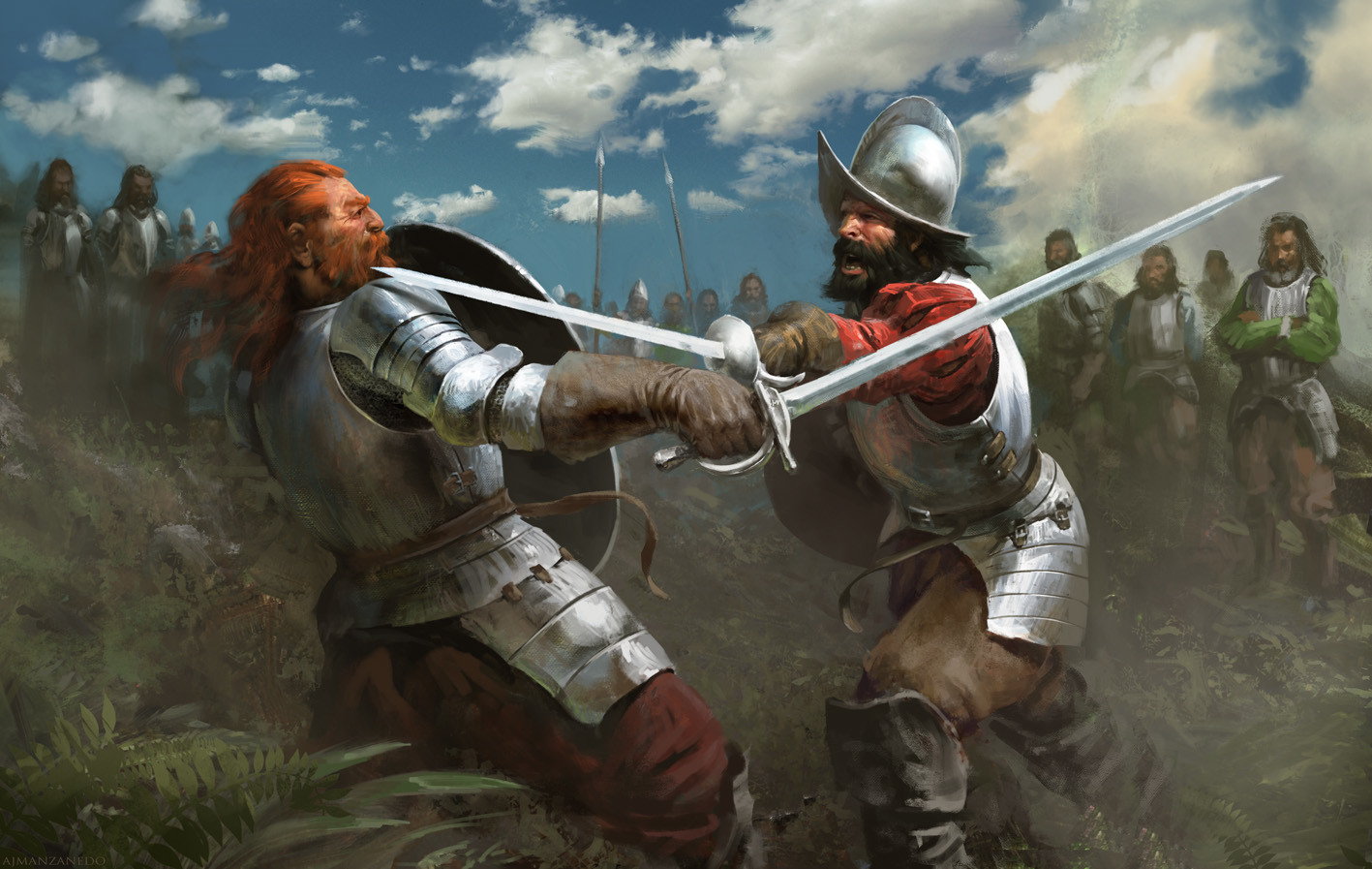
Duel by Antonio J Manzanedo

Three Hand Duel

There are three combat stances: fast stance, parry stance, and feint stance. Parry beats fast, feint beats parry, and fast beats feint. Anyone can use fast stance, anyone with a weapon (or specialized unarmed training) can use parry stance, and anyone proficient with their weapon can use feint stance. Anyone whose stance beats opponents’ stances deals damage dice plus bonus damage. Anyone whose stances matches their opponent's both deals and takes bonus damage (but not damage dice). Blocking stance is available if you have a shield, allowing you to roll a 'damage die' that will reduce any damage you take in the following round. Weapons and high strength increase damage, armor reduces damage taken.


Advantages: pretty complex without being hard to use, gives plenty of active decision making opportunity to players. Inherently feels flavorful because you're declaring how your character will fight. Easily scalable up to mass combat with something like charge, flank, route or similar (I haven't looked into medieval battle strategy). It also addresses the massive threat of being flanked, as both opponents can doom your options. There is also some opportunity to add special stances as class abilities or other kinds of specialized combat training, but this should be done with extreme care. Also runs faster than most dice systems, because someone is always taking damage.


Challenges: make sure you choose what your stance will be before you ask someone, you'll probably want to write it down. Honestly cards might work for this purpose. Also a bit hard for people to wrap their head around if they're not familiar with the terms, but they can be easily equated to rock, paper, and scissors (obviously what the system is based on). Also if you're unarmed or not proficient, there's always a best choice against you, so that's iffy.


Battle by Faraz Shanyar
 

Behind the Blades

Each character has a stamina stat. Before the turn, they can invest however many they want into offense and defense respectively. If one side's offense totals higher than the other's defense, that amount of damage is dealt. Armor and shields add fixed defense points, weapons and strength add fixed offense points. Possible additional rule: one may invest a third of their stamina in a 'guard break' that reduces enemy defense to zero. Stamina may lower each turn.


Advantages: very simple, very deadly. Again, possible to add special moves with a fixed stamina cost, or a fixed portion cost.


Challenges: again relies heavily on not knowing what the opponent will do. Even more so, knowing the enemy's stamina can potentially cause problems.


Spilled Wine Drawing

11"x14" Prismacolor pencils on Dura-lene acetate.
Spilled Wine by Daniel Landerman (NSFW warning)
 

Steel Ruckus

An attack is a d20 roll. If the result is higher than the opponent's defense, the attack is successful, and you can either strike them or shove them away. The first strike throws you off guard for a turn. If struck while off guard, you are wounded and unable to fight until healed. Strikes can be either deflected or absorbed, with a weapon or tool you are holding. Deflecting causes you to drop that item, while absorbing the strike damages the item. It takes one turn to attack, close distance (such as after being shoved), run away, grab two items from the ground or your belt, or grab one item from a container within reach (like your backpack) or from another belt in reach. Armor and shields add to defense, weapons and combat training add to attack.


Advantages: most compatible with D&D style combat systems, which includes a lot of OSR stuff, so conversion of existing combat should be a lot easier. Lots of potential for environmental fun, like shoving people into hazards (down stairs, into spiders) or dropping a weapon out of reach (off a bridge, down a cliff).


Challenges: the way shoving and running away work, there should probably be a similarly robust chase system. That seems like fun, but it is a challenge. Should also come with somewhat strict limits on what can be hung from a belt, lest players simply load their waist with spare weapons and shields.


-----


If you've been following for a while, the Three Hand Duel was what I was using for my Skies Below stuff. These are still broadly in chronological order, in the order I came up with them. I'll probably stick with Steel Ruckus for the time being, and flesh it out with more details in the future.

Wednesday, February 12, 2020

Blank space and mechanical fluff

Perhaps my favorite part of any character sheet is the 'appearance' section, especially if it has an area for drawing a character portrait.

People should be allowed and encouraged to engage in creative pursuits, irrespective of technical skill, and it helps them to explore the character. Likewise, when I'm having trouble fleshing out a character, it can really help to have some guidance or framework to start with. To this end, part of the character creation process in my game generates connections to the larger setting, along with open-ended questions inviting further worldbuilding on the player's end.

one million by Lois van Baarle

It's important to have this kind of blank space, and sometimes it's necessary to point players toward it. Some games try to make every part of character development mechanical, and I generally find that to be a very clumsy, unhelpful approach (generally mind you, there are exceptions) much like trying to mechanically simulate every physical element of a fight or adventure. Oftentimes it's best to just leave the relatively unimportant details up to the players, they can reason a situation intuitively or come up with interesting details for themselves.

Part of this is how magic users in Skies Below must keep an arcane focus to use their magic in combat. This can be any item they possess, such as a wand, tome, or lute, or even such items as a hat, flaming sword, or key. The arcane focus doesn't do much mechanically, besides adding some tension if it gets lost or stolen, its main purpose is to make the player think about their magic, what it looks like and what it says about their character. A character who casts magic through a musical instrument might think of their character as sort of a bard, or one with a blanket may think of that as a shelter the character has held onto their whole life.

Tavern Hijinks by Lap Pun Cheung

Now I'm extending this philosophy to some of the martial classes. In order to enter rage, a berserker must perform a brief, ritualistic action such as eating a certain food or calling out a warcry. Similarly, to use their cooperative abilities, the infantry must use a team name that the party has agreed on. These mostly won't impact actual gameplay, but will push players to add a bit of character building to their PCs, and the infantry's team name encourages them to talk to the other characters and really work together creatively.

Berserker rage ritual
  1. Shout out "For mount and stone!"
  2. Call out "Blood of the bloodmaker!"
  3. Declare "By the skulls power!"
  4. A quick, violent dance.
  5. Don a fierce mask.
  6. Remove a placid mask.
  7. Swallow a flame.
  8. Bite into shield.
  9. Devour raw meat.
  10. Drink personalized draught.
  11. Anoint in sacred perfume.
  12. Anoint in ash.
  13. Anoint in honey.
  14. Cut a rune into chest.
  15. Shatter a clay disc.
  16. Rip a sacred cloth.
  17. Crush a soul cricket.
  18. Crack knuckles.
  19. Tear off shirt.
  20. Clasp hands in a moment of meditation.
Holographic battle by Diana Tsareva

Saturday, November 16, 2019

Skies Below skill system

Skills are generally based on professions, aside from particular outliers like ranged combat. Generally if you're using the butcher skill, you'd want to do things a butcher is good at, with the poet skill you can do things a poet would do. The uses and effects aren't precisely categorized or quantified, it's intended to be flexible and intuitive.

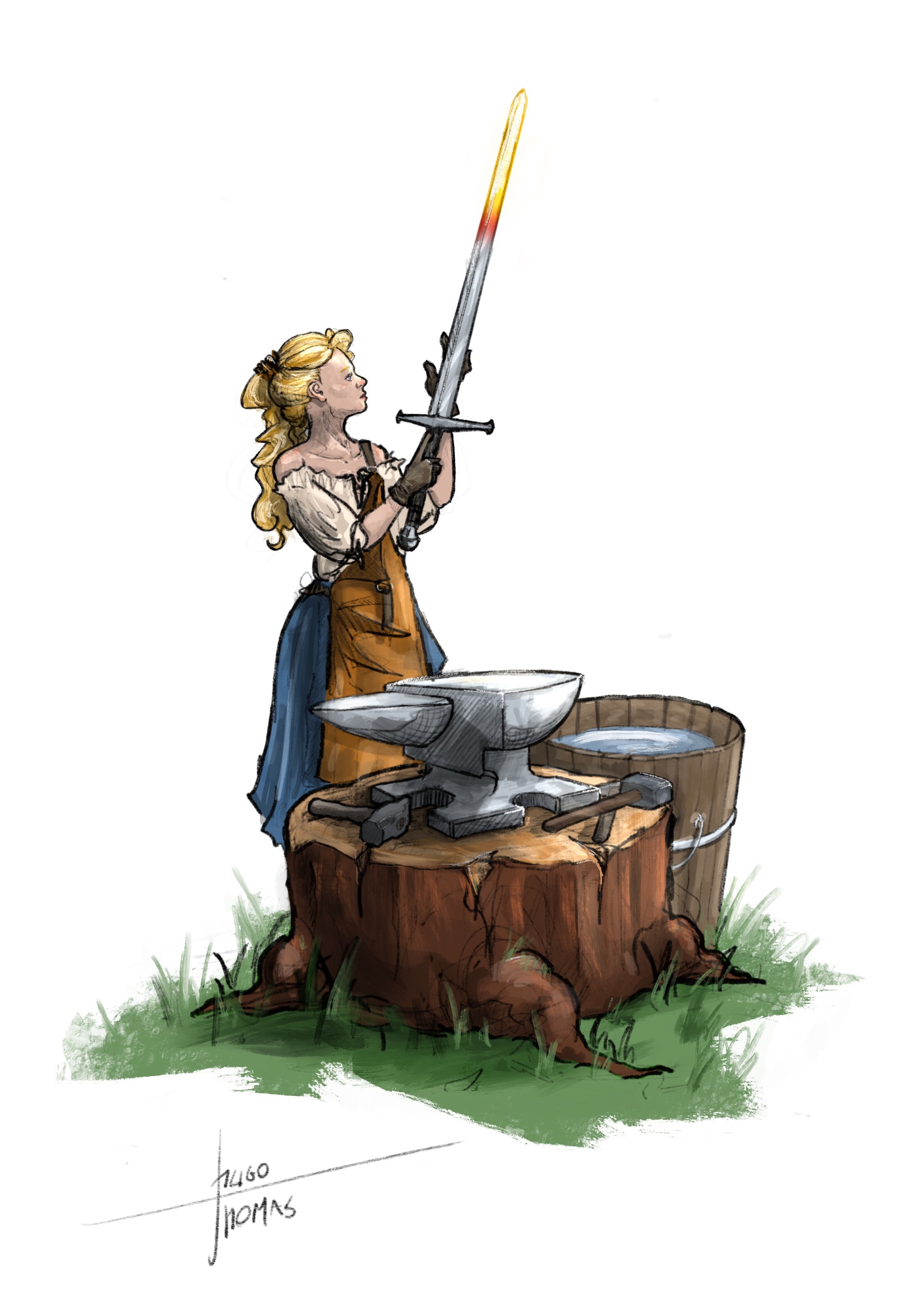
Blacksmith by Arnesson Art / Thomas hugo

Each character has skill slots equal to their Will score (which can be modified by things like class levels, mutations, or other effects), and each skill takes one slot. Extra languages and magic powers also take skill slots. New skills start with no stars and no marks.

To perform a skill successfully, the player must roll 1d6 and get 2 or lower. Each time the character uses a skill in an important situation, whether successful or failed, they add a mark. When the skill has three marks, the character can spend a week in town (or another safe area) and make a Will save to gain a star. A skill can have up to three stars, and each star increases the target number by one.

basic challenges - illustration for dresden rpg
basic challenges by Jayna Pavlin

Most backgrounds give a skill, and a character's first class level gives them one of three skills randomly selected. New skills can be learned by practicing for a week with a teacher who has at least two stars, or through concentrated practice for a month with ample freedom, tools, and supplies which may be expensive or rare. Trainers should charge or require other compensation.

It's important to note that ranged combat uses the skills launcher, archer, and shooter depending on the weapon, and the attack hits if the skill check is successful. Harder shots can be made by rolling under half the normal target number, and there are surely non-combat applications for these skills as well.

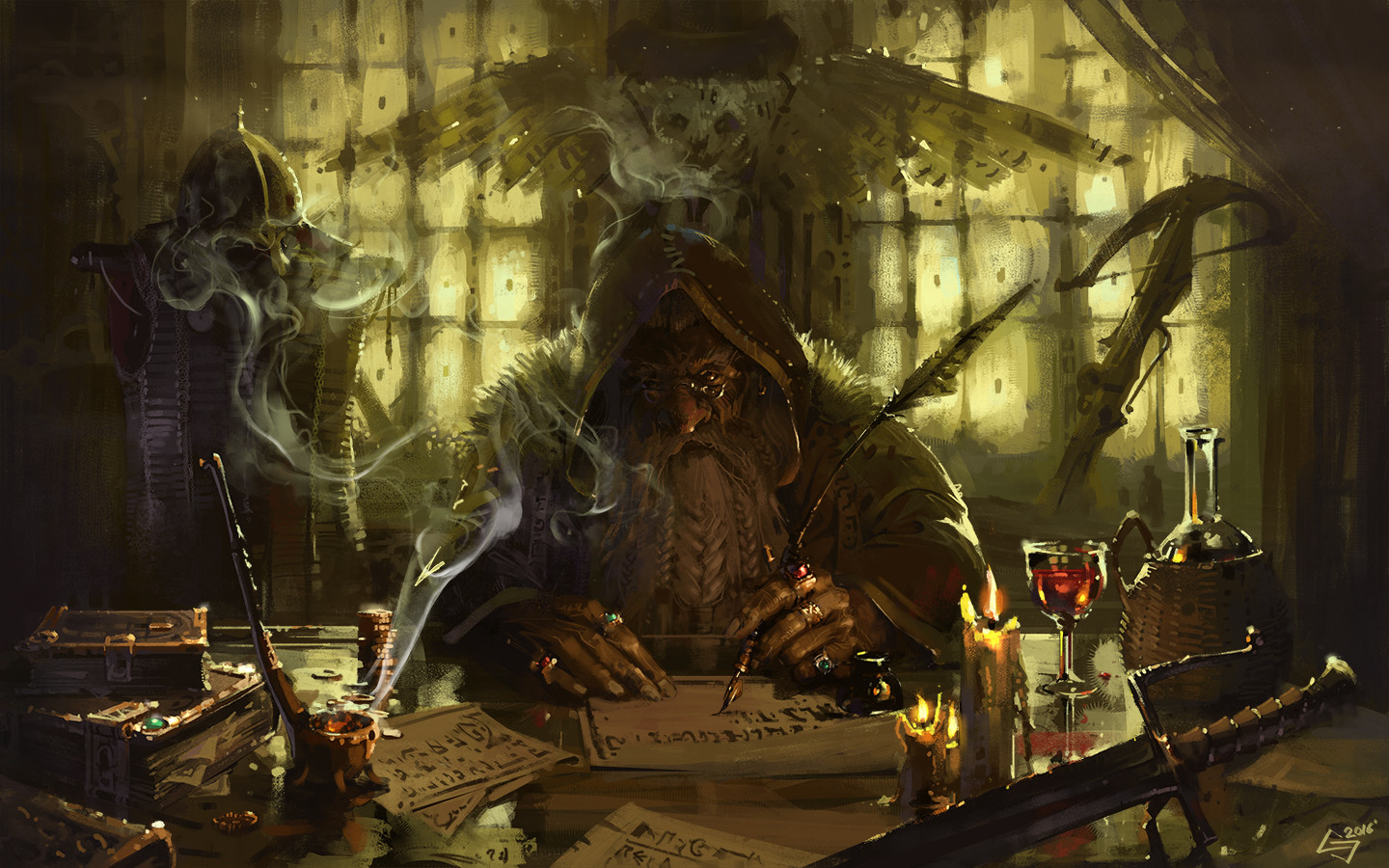
Dwarven scribe by MichaÅ‚ Sztuka

Here are some examples of things that can be done with certain skills:

With the butcher skill you could cut open a dead creature and acquire useful organs or body parts, or skin it to get a good sturdy pelt.

Using the smith skill you could repair metal items that had been damaged but not destroyed, or use a forge and metals into armor, weapons, or other items.

Wednesday, November 13, 2019

Combat, weapons, and health in Skies Below

To those just joining, Skies Below is the working title for my personal RPG project. Combat isn't the central focus or quite as emphasized as it tends to be in some of the more popular RPGs, but it is still pretty important in a medieval setting and I like to have a good tactical fight every now and then.

Battle by Faraz Shanyar

Vigor is the measure of a character's ability to keep on fighting, generally avoid major injury be it due to physical stamina, morale, or even luck. When damage has reduced a character's vigor to zero, that character is worn out, and the next damage they take will cause a Wound. When characters rest for an hour long meal break and eat at least one ration, their vigor is restored to full. Likewise when they sleep for eight hours, and they can drink alcohol to restore 1d6 vigor in a round.

A wounded character cannot regain vigor until they've healed, which takes one week per wound. If a wounded character takes damage, they must roll 1d6. If the result is higher than their number of wounds, they survive and take a wound. If the result is equal to or lower than their number of wounds, they become fatally wounded. A fatally wounded character can die right away, or within the week if the player wishes, but the character won't be able to continue adventuring consistently while dying.

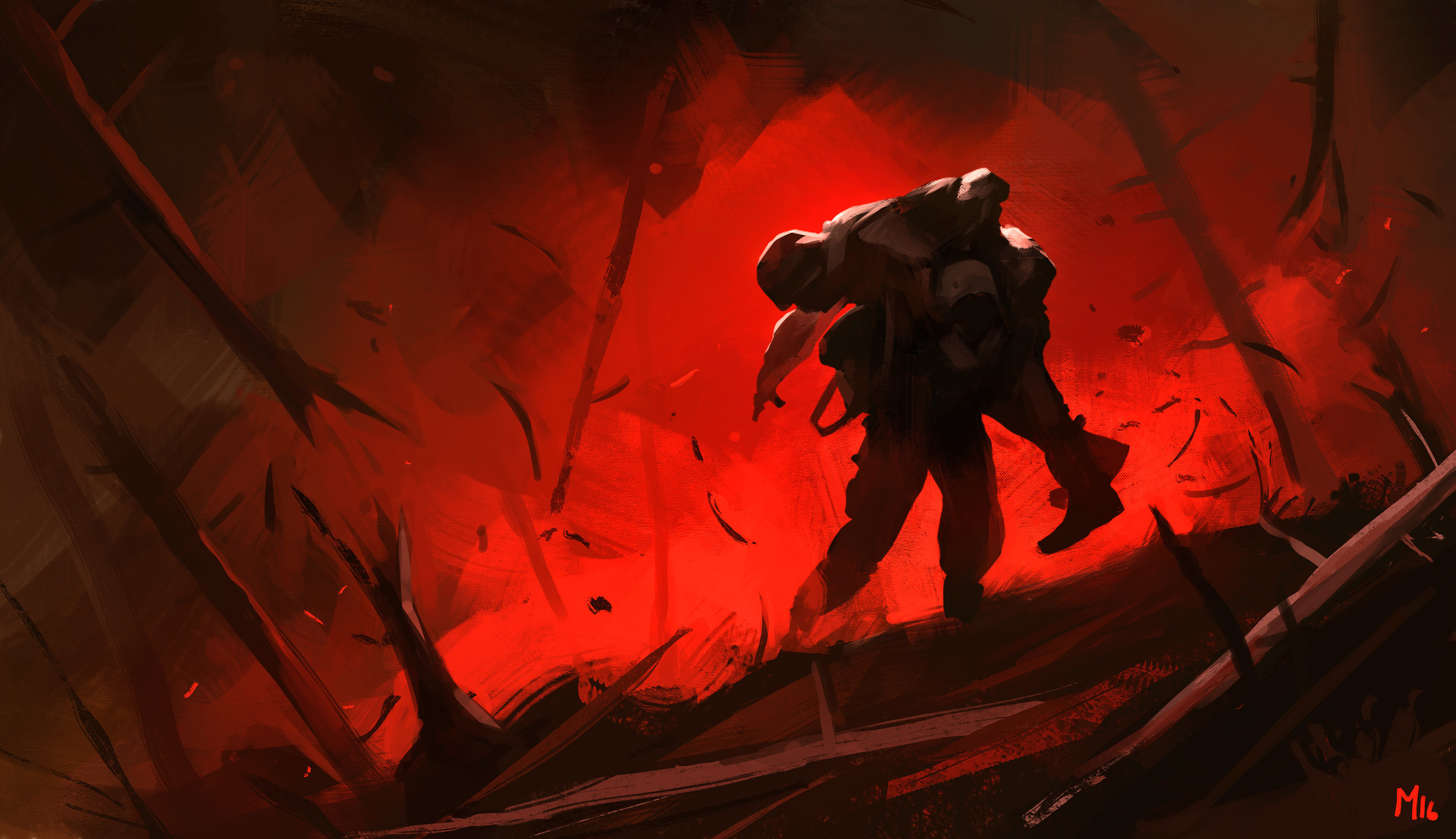
Carrying the Wounded by Dominik Mayer

Each round of combat takes ten seconds, and melee combatants have three stances to choose from; fast, parry, and feint. Much like rock paper scissors, fast stance is beaten by parry stance, parry is beaten by feint, and feint stance is beaten by fast stance. If your stance is beaten by your opponent's, you take full damage. If your stance matches your opponent's, each take 1 damage plus attack bonuses. A character can only use feint stance with a weapon they are proficient with, and can use parry stance with any weapon.

Animals or creatures of similar mental capacity can either pounce or dig in, which are analogous to a fast stance or parry stance respectively. An animal trained specifically in combat can feint, as can creatures with human-level intelligence.

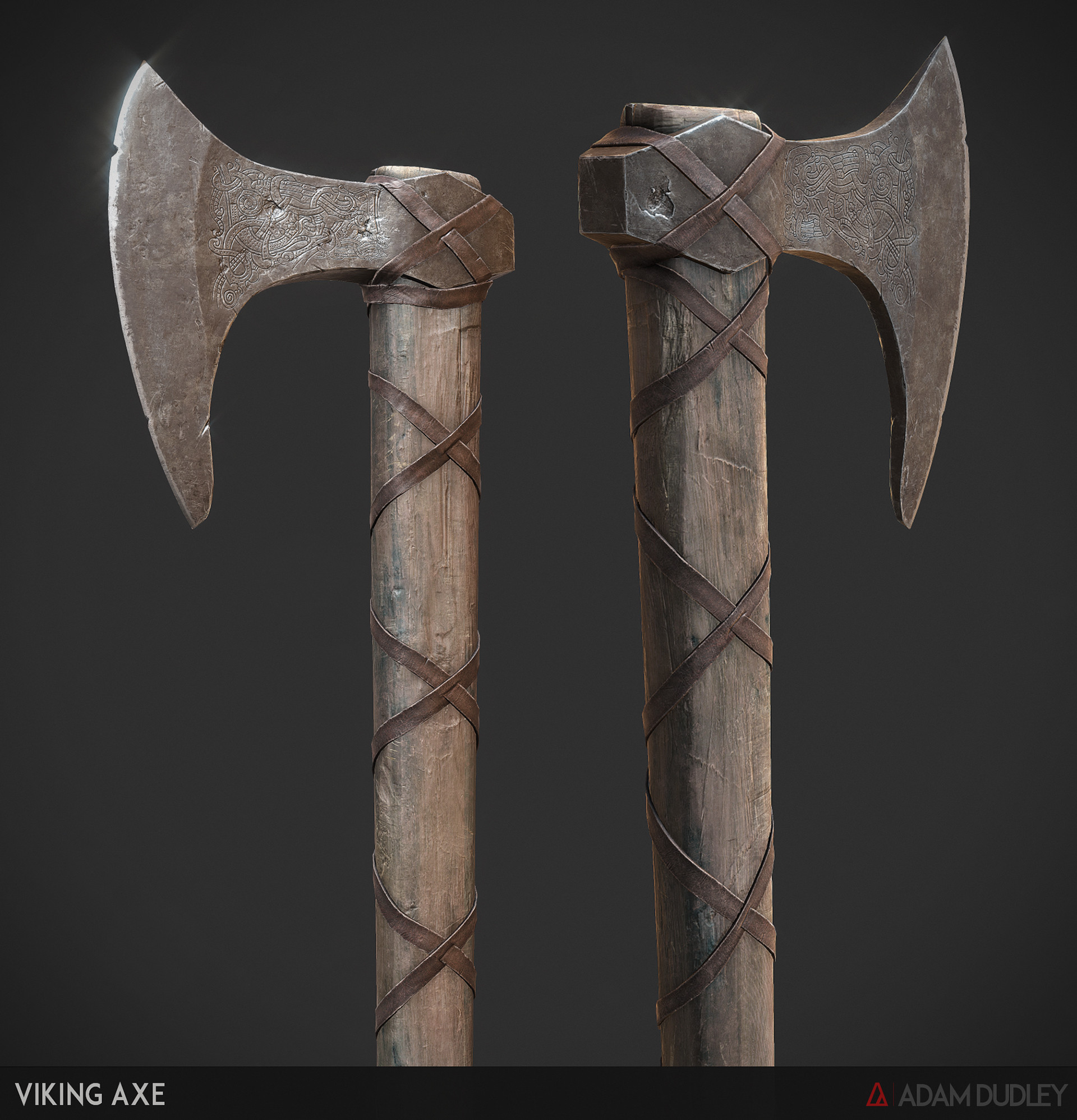
There are four categories of melee weapons: light weapons, mass weapons, balanced weapons, and reach weapons. Light weapons are generally small, one-handed ones like daggers, knuckles, or a small cudgel. A mass weapon could be a mace, hammer, or axe which can be wielded in one hand. Balanced weapons include swords, spears, and other weapons that are generally longer but can be used either one handed or two handed, and have a more even balance along their length. Reach weapons include greatswords, poleaxes, and most other polearms, and can only be used with both hands.

                               | attack | defense | armor piercing |
Light weapon:         |    +1   |     +1     |           +1          |
Mass weapon:        |    +1   |     +1     |           +2          |
Balanced weapon:  |   +2    |    +2      |          +1           |
Reach weapon:      |   +2    |    +2      |          +2           |

Viking Axe by Adam Dudley

Light weapon damage uses the lower result of 2d6, one handed mass or balanced weapons deal 1d6, and two handed weapons deal the higher result of 2d6. While wielding a mass or balanced weapon, a light weapon in the offhand grants +1 attack and armor piercing. With a shield, the character can choose to block instead of attacking, increasing their defense by the lower result of 2d6 with a small shield, or 1d6 with a large shield.

Ranged attacks use the a skill check each round. For thrown weapons such as knives, darts, or a sling, the launcher skill is rolled. For bows, the archer skill is used, and for crossbows or firearms the shooter skill. For a particularly difficult shot, such as trying to hit someone hiding in underbrush or out of range, the skill check is twice as hard.

A successful unarmed attack deals one damage plus attack bonus. With special unarmed training, an unarmed character can enter parry stance against unarmed enemies. With unarmed mastery, an unarmed character can enter parry stance against armed opponents.

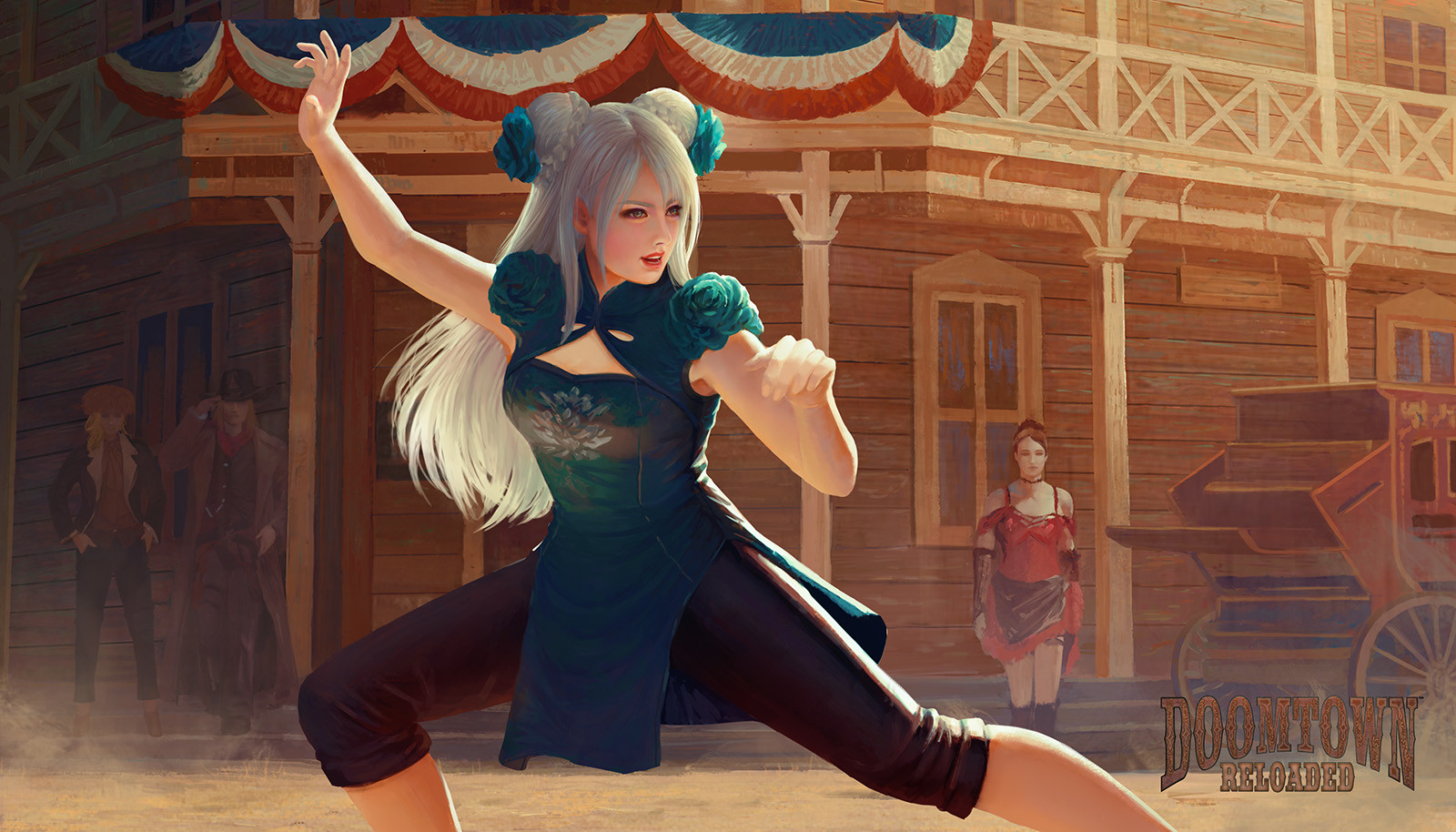
Xiu Yin Chen by Mario Wibisono

Armor increases defense, +1 for gambeson or other light armor, +2 for chain or other medium armor, and +3 for plate or other heavy armor. If the character wears heavy armor all day, they become strained, and heavy armor takes one minute to put on with help.

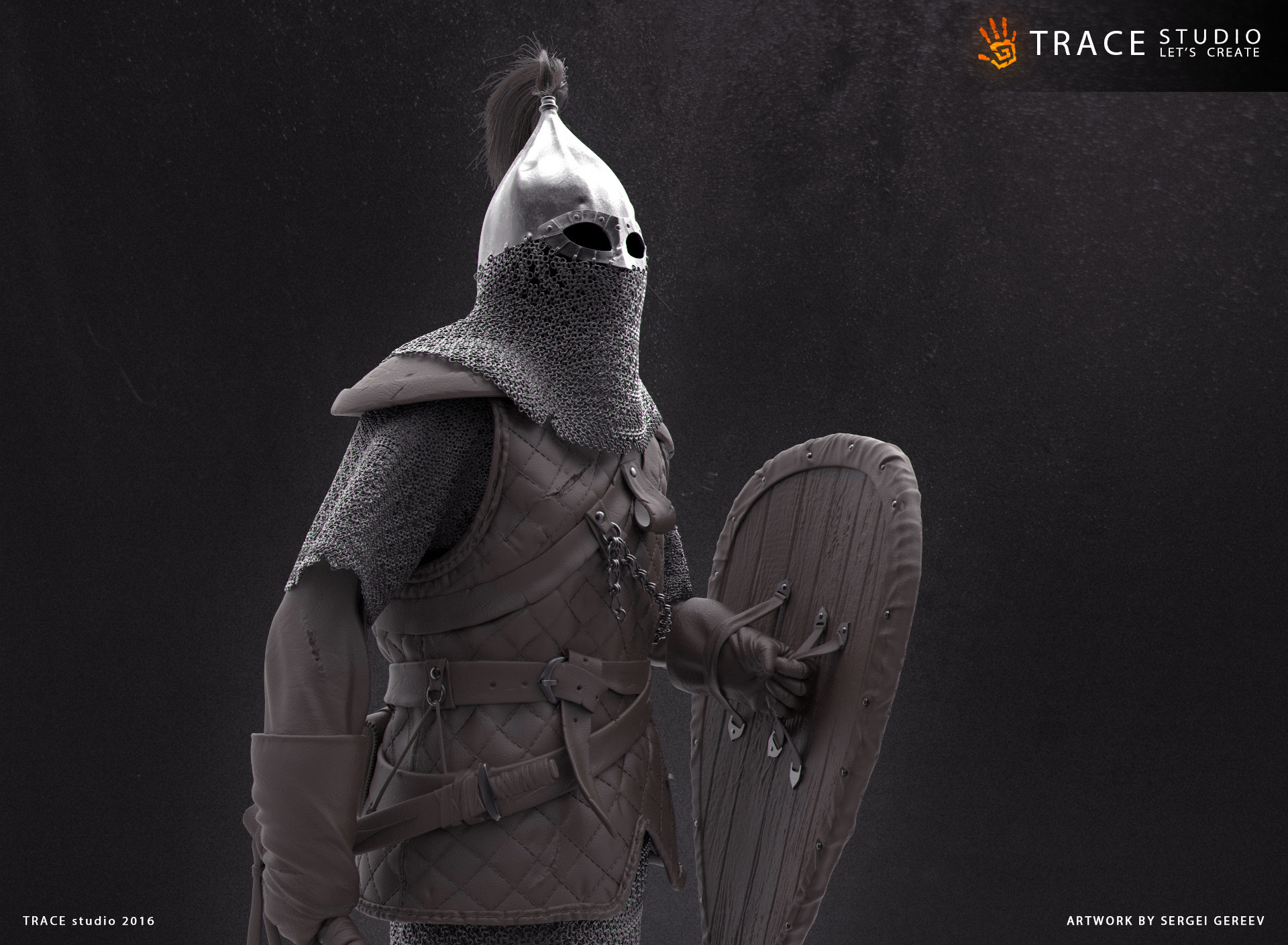
Varangian by Sergei Gereev

There are five movement choices in a round. Closing distance, creating distance, maintaining distance, racing to a target, and holding ground. When making one of these actions against a foe, such as racing against someone, maintaining distance against a fleeing opponent, or holding ground against someone trying to get past your character, each roll 1d20 and add their speed bonuses, whoever rolls higher wins.

These rules may seem a bit unfocused, but in general it's designed to focus on melee combat and create a reasonably realistic, tactical, and streamlined experience. Lots of this was inspired by https://spellsandsteel.blogspot.com/ so check out that blog if you want some really interesting real-world data related to weapons, travel, equipment, and other information relevant to a medieval fantasy type game. Sorry I missed a post, for those that noticed.

Wednesday, November 6, 2019

Skies Below character creation & some basic rules

Skies Below is intended to be a game that makes the player really feel the human struggles of their character. To that end, it may be best to start with how those characters will be created.

A Home Up High
A Home Up High by Chris Lambert

It is recommended that you first come up with a name, then roll a background, secret, and connection. You can also roll other things for your character's history and personality, such as memories, fears, or attitude, or you may want to wait until after rolling your core attributes. These are generated with 3d6 each in order of will, strength, and agility, with one optional reroll. This will give scores ranging from 3 to 18, and each will have a bonus depending on the number.

Score          Bonus
3, 4, 5            -2
6, 7, 8            -1
9, 10, 11        +0
12, 13, 14      +1
15, 16, 17      +2
18                  +3

Saves can be made by rolling 1d20 equal to or lower than the associated attribute, such as rolling a strength save to resist petrification or lift a falling door, or rolling a will save to fend of mental effects. Each attribute score and bonus contributes to another secondary attribute. The will score determines your base number of skill slots and the bonus determines your magic score. The strength score determines your base number of inventory slots and the bonus adds to your attack bonus. The agility score determines your base stealth and the bonus adds to your speed bonus.

Potions Fact by A. Shipwright

A level 1 character starts with 6 maximum Vigor, and increases their maximum by 1d6 every class level. This represents not necessarily physical health, morale, or willpower, but rather a general sense of your character's ability to keep fighting on. If you take damage at 0 vigor, you take a wound. Each time a character becomes wounded they must roll 1d6, and if the result is equal to or lower than their number of wounds then it is a fatal wound. They should be allowed to choose whether they die there or sometime within the next week, within reason.

Each player character can start at level 1 unless running a character funnel. For new players or a new campaign, only a few starting classes should be available until people get more comfortable playing or as the campaign develops. Most characters will get an outfit and skill from their background, and most classes start with a weapon and some interesting items.

Old Spanish Treasure Chest by Samuel Sheath

When you spend money on personal comforts and luxuries, you gain experience points. It costs 200 exp to reach level 2, 400 to reach level 3, and 800 to reach level 4. To level up, you spend a month in town relaxing, carousing, or training as the player sees fit.

Character sheets are still work-in-progress, but can be found here: https://docs.google.com/document/d/1asE7RCAgWk631BltsCveVAw3HdVmEyjV-dCA08Uow7o/edit?usp=sharing
Backgrounds, secrets, and connections can be found here, along with some other backstory elements: http://wordsforyellow.blogspot.com/2019/10/character-history.html
Starting classes here: http://wordsforyellow.blogspot.com/2019/10/revised-starting-classes.html
Other classes here: http://wordsforyellow.blogspot.com/2019/10/martial-classes.html
And here: http://wordsforyellow.blogspot.com/2019/09/magic-user-classes.html
Partial combat rules can be found here: http://wordsforyellow.blogspot.com/2019/03/proficiency.html

Monday, March 11, 2019

Proficiency

My weapon types are copied directly from Spells & Steel, seen here: https://spellsandsteel.blogspot.com/2012/09/weapon-behaviour-simplifying.html
As a HEMA practitioner (or former practitioner), he has some excellent insights into weapon behavior and combat mechanics, and I would highly recommend the blog if you have as much interest in this stuff as I do.

I will restate the weapon types here in my own words:
Light weapons: dagger, knuckles, kama, katar, cudgel, etc. Possibly whips as well.
Balanced weapons: arming sword, long sword, spear, bo staff, etc.
Mass weapons: axe, mace, flail (if you decide to include them), hammer, etc.
Reach weapons: poleaxe/polehammer, greatsword, etc.

The general jist of it is pretty easy to understand. For damage, it will always be dealt in increments of d6. Light weapons deal the lower of 2d6, and other weapons will deal 1d6 if one handed, or the higher of 2d6 if two handed. Strength bonus is always added

Everyone is proficient with light weapons, with possible exceptions for particularly exotic ones, and combat trained classes get proficiency with all melee weapons and armor. They can choose to exchange one melee proficiency for one rank in a ranged skill. Combat capable classes get one choice of melee or ranged proficiency, and one choice of armor or shield proficiency.

If wielding a weapon that you are not proficient with, you cannot parry or feint with it. Each character can have one personal weapon to become proficient with, after they have dealt damage with it to three different foes. This only applies to that specific weapon, not other weapons of its type, and if they decide to become personally proficient with a new weapon, they are no longer proficient with the previous one.

Unarmed attacks deal 1 damage plus strength bonus by default. With martial arts training, you can parry unarmed attacks while unarmed, and deal the lower of 2d6. With martial arts mastery, you can parry weapons while unarmed, and deal the higher of 2d6.

For ranged weapons, I would have two skills; archery and throwing. Each range increment incurs cumulative a penalty of -1, and trick shots require a difficult check. Range increments would generally differ depending on the weapon. Perhaps a third skill such as 'firing' for crossbows and guns, but these would be rare and expensive, unavailable for a new character.

Wednesday, March 6, 2019

Starting classes

Class format is based heavily on the GLOG format from Goblin Punch. That being said, while I borrow a few things from the GLOG core rules, the combat system (to which most of these are related) is completely different.


Infantry

Fight well on a team. Combat trained.
  • Stat bonus: +1 blocking defense every level
  • Starting items: chainmail, large shield, spear, lucky charm
  • Skill: archer, surgeon, or tactician
Level 1: phalanx, siege diet
Level 2: team attack, mentor
Level 3: squad support
Level 4: heroic sacrifice, rally
  • Phalanx: when you block alongside allies in the same engagement, gain +1 defense for each ally, and +2 for each infantry ally blocking with you.
  • Siege diet: you can split your meals with an ally to each get by on one ration per day.
  • Team attack: gain +1 damage for each ally engaged with the same target in the same round.
  • Mentor: if you have fought alongside an ally through at least one level up, once per encounter you can perform one non-magical technique they have performed during the same encounter, including skill checks if you have the same skill.
  • Squad support: if an ally within reach would take damage from a ranged attack, you may take their place.
  • Heroic sacrifice: whenever an ally in the same engagement would take a wound, you can choose to take the damage in their place.
  • Rally: once per day, call out inspiration to your allies to restore 1d6 hit points to all who an see or hear you.

Thief

Use stealth, skill, and luck to steal. Combat capable.
  • State bonus: +1 stealth every level
  • Starting items: blackjack, dark cloak, manacles with key
  • Skill: sleight of hand, jeweler, or panhandler
Level 1: thievery, change hands
Level 2: lucky, stash
Level 3: slippery
Level 4: very lucky, great escape
  • Thievery: gain the locksmith and pickpocket skills at rank 1.
  • Change hands: once per session, you can declare that you retroactively swapped items with another character in the party, no matter how separated you are.
  • Lucky: once per day, reroll any 1d6 roll immediately after the result has been seen. Can be used for damage, a skill check, or any other 1d6.
  • Stash: by storing treasure in a hidden way, you can keep up to half of your next level's worth of treasure safe from other thieves at night or during the day.
  • Slippery: get a +5 bonus to speed when retreating out of a melee engagement.
  • Very lucky: reroll up to two additional 1d6 rolls, as lucky.
  • Great escape: once per day, you can instantly escape from anything you could plausibly have escaped from, no matter how difficult it would have been.

Hunter

Specially skilled in subduing large beasts and laying traps. Combat capable.
  • Stat bonus: +1 to stealth every two levels
  • Starting items: hunting knife, trapping kit, bow, quiver, animal skull
  • Skill: survivor, butcher, or archer
Level 1: trapper, astride
Level 2: wrangle
Level 3: provoke, fast trapper
Level 4: steer
  • Trapper: improvise traps outside of combat to either halt, damage, or create an alert when passed through. You must spend an hour in the morning preparing your trapping kit. More elaborate or effective traps could be made using specific materials at GM discretion.
  • Astride: climb on top of large beasts to strike vulnerable areas for a guaranteed hit, along with a +3 damage bonus. Beasts can spend their turn attempting to shake off a hunter with a strength save, but if the hunter spends their turn clinging on, it becomes a strength contest.
  • Wrangle: using a rope, attempt to tie down a beast with a strength contest. Anyone can contribute to this contest, but any non-hunters will be knocked prone if the beast wins instead. Any tied down beast will remain prone until it can succeed a difficult strength save.
  • Provoke: take an action to impel beasts into charging at you. They will take 1 damage if you are beside a wall when you do this.
  • Fast trapper: once per encounter, a trap can be improvised during combat. This takes one full round, accounting for movement to lay tripwires or hazards.
  • Steer: while astride, a hunter can force the beast to move if they succeed on a strength contest.
These are the three classes I recommend having available from the start, to ease players into the game, and to facilitate a lower starting power level and magical scale. After they play for a bit, and do various interesting things, I recommend opening up class options, including magical classes which will be detailed in a later post.

Tuesday, March 5, 2019

Skies Below

The current working title for my homebrew game is Skies Below. And of course, I've thought of a new combat system for it. My goal with designing a combat system is for it to be logical, simple, and dynamic.
This one includes three main attack options; press the attack, parry and counter, or feint and follow through. These work similar to rock-paper-scissors, except that while anyone can press, you can only parry with a weapon, and only combatants with training can feint. Additionally, anyone with a shield can block, increasing their defenses for the round.
If your attack beats your opponent's, you deal 1d6 damage modified by weapon type, plus strength modifier, and reduced by their defense. If you pick the same attack as your opponent's, you deal 1 damage plus your strength modifier, reduced by their defense.
Beasts and other unintelligent combatants can lunge (as press), or latch on (as parry), and typically cannot feint.
This system works well because the attack choice can essentially replace the attack roll, though it doesn't include provision for critical attacks. That's the main thing I want to consider in the future. For ranged combat, it's simply going to be a skill, either archery or throwing.

Wednesday, September 12, 2018

Potion Generator

Random Potion Generator

Use this to generate some interesting random potions. Tables are written in descending order of significance, so you can just keep rolling until you get a potion exactly as complex as you want. You can even roll multiple times on a given table, especially side effects and flavors.

Effect 

  1. Increased accuracy
  2. Increased hit points (long-lasting)
  3. Glow (long-lasting)
  4. Invisibility
  5. Darksight
  6. Water breathing
  7. Levitation
  8. Haste

Side Effect 

  1. Change skin color
  2. Change hair color
  3. Grow feathers
  4. Grow scales
  5. Eyes sprout from skin
  6. Teeth sprout from skin
  7. Gain weight
  8. Vomit

Flavor 

  1. Fruity
  2. Citrus
  3. Salty
  4. Bitter
  5. Sour
  6. Bland
  7. Spicy
  8. Tangy

Texture 

  1. Carbonated
  2. Oily
  3. Pulpy
  4. Gritty
  5. Creamy
  6. Thick (like pudding)
  7. Syrupy
  8. Foamy

Size 

  1. Microliter (droplet)
  2. Millileter (dram)
  3. Centiliter (10ml or two tbsp)
  4. Deciliter (100ml or half cup)
  5. Two deciliters (200ml or one cup)
  6. Half liter (two cups)
  7. Liter (one bottle)
  8. Two liters (jug)

Container

  1. Glass bottle
  2. Clay jar
  3. Waterskin
  4. Stone pitcher
  5. Crystal decanter
  6. Metal vial
  7. Wax-coated sponge
  8. Magic field

Cursed Effect 

  1. Blind
  2. Numb
  3. Paralyzed (short-lasting)
  4. Asleep (after potion wears off)
  5. Addictive
  6. Repulsive (can't drink another)
  7. Gibberish
  8. Sluggish (half movement)

Examples

2, 7, 3, 3, 7, 5, 5
A semi-common drug known to those in the underground as Filler, it is relatively unknown in normal society. Its taste alone could be described as inoffensive, but the texture makes it highly unpleasant to most. Drinking it causes growth of a type of firm fat deposits that resemble muscle, but soften into normal fat over night. An adventurer's dose is usually sold in finely carved crystal decanters that would make the the whole thing hard to get down during the heat of battle, so most dealers will recommend drinking it at the start of the day.

5, 3, 1, 7, 6, 4, 3
Usually imported from tropical islands, this potion is kept in the same stone cups used to mix it from exotic fruits and herbs. It is known as Eagle Eye because it allows the drinker to see through any shadow, but causes feathers to sprout from the drinker's shoulders and hips. The shift in vision is deeply disorienting, and stuns anyone who drinks it for up to a minute. Certain adventurers tout it as a superior alternative to torches or oil lamps, but most stick with fire, and Eagle Eye remains a niche product.

7, 1, 4, 5, 8, 7, 8
Referred to as Cloud, or drinkable clouds, this is thought of by most adventurers as being of little use, but it retains a high price for its popularity among the upper class. The drinker will find themselves floating gently in the air, as though swimming. Most often it is stripped of the wax and then warmed until it becomes thinner and drips out of the sponge, giving it a flavor often compared to tea. The large size of the sponge is one of the biggest hindrances for an adventurer.

In my opinion these examples I rolled up are a perfect sign of how good this table is, and my only hope is that others will find it as useful and enjoyable as me.

Monday, August 20, 2018

Roleplaying games cause health problems

Most games measure the physical status of characters with a linear number or bar, which typically measures their status from perfectly fine to dead. Whether it's called hit points, health bar, or life, damaging effects will reduce it by flat, cumulative quantities that can end in death from a thousand paper cuts just as effectively as an explosion by their head. This made sense at one point, but in the current wider context it's nonsense.

The origin of roleplaying games, as well as a shocking number of game design conventions, is Dungeons & Dragons, often abbreviated to D&D. It was adapted from Chainmail, a medieval fantasy wargame in which most units would die if hit by any attack. When adapting it from a wargame to a roleplaying game, Dave Arneson wanted to increase survivability and granularity so that players would feel more like heroes than expendable soldiers. He added in the 'hit points,' which presumably represent an individuals physical health, as well as dodging skill and luck to some degree.

These hit points were based on civil war naval combat wargames, in which ships would have hull points that were depleted by attacks before the ship would sink. Much like the infamous one-minute combat round, hull points made much more sense in their strategic origin than they do in a more specific, individual scenario. In both systems, the target is fully capable of fighting and moving at full potential until defeated, being either sunk or killed respectively. When a ship is taking shots to the hull, it makes sense that the guns would be fully capable of firing as long as the ship stays afloat, barring possible crew deaths and direct hits to the weaponry. But when a person is wounded significantly, they are noticeably less capable of wielding a weapon or defending themselves, even while alive and still able to fully recover later.

The issue here is that damage and wounds are tracked in a purely linear, cumulative manner. Some games will actually include specific types of wounds, but they usually take the form of a very restricted and oftentimes minor debuff caused by one special attack. Consider some real world comparisons. If you have ten paper cuts along your hand, each one centimeter long and one millimeter deep, then that wouldn't matter much. If instead, you had one cut ten centimeters long (about four inches) and one centimeter deep, it would be significantly more concerning. And likewise if you had ten of those cuts, they would be nothing compared to one wound a meter long (about three feet), and ten centimeters deep, which would be a mortal danger no matter where it is on the body.

In this consideration it seems quite obvious that most wounds on a human don't quite add up in the way hull damage does on a ship. It can be a helpful simplification in a tabletop game, or in early computer games where processing power was limited and detailed simulations were difficult. However, for any modern video game trying to claim any realism, a health bar or life bar of any kind really makes no sense. Many games, such as most military shooters, try to make this seem more realistic by hiding the health bar, instead displaying blood effects on the edges of the screen and allowing health to regenerate over time.

In fact, this quick health regeneration makes the health system significantly less realistic, and accomplishes only a more even balance for a game with guns and attacks that can't be dodged reliably. While there is an argument to be made for this balancing, my point is that an argument could equally be made against the general concept of linear health bars. For tabletop games, adding a complex wound system always bears the possibility of making the game overly complicated and unwieldy, but there are better ways to handle that as well. And making players worry about every wound will increase the tension of the game, creating more engagement and interest in the outcome of every conflict, and in turn increases the sense of reward whenever a challenge is overcome.