Showing posts with label Religion. Show all posts

Wednesday, September 30, 2020

The Seven Saints

 Siblings who were heroes in their time, each was dedicated to a holy pursuit and exemplified it to an incredible degree. It has been decades since then, and they are considered holy figures. Especially for adventurers or other outsiders to normal society, the saints are an excellent way to pursue faith, along with strong personal virtues and goals to align with.


A depiction of the saints can be identified most easily by a golden body part, differing depending on the saint in question. An image of a woman with chaotic golden lines along her skin however is blasphemy, and is often a sign of great evil.

Yashtas, Saint of Song

Weaver of the saints' many tales, throughout her life she struggled to spread her name without losing her sense of self, or becoming distorted in the minds of the public. Sometimes those who inherited her charge seek only personal fame to the exclusion of all else, and are warned by her teachings about the risks of such behavior. 

Body: tongue

Symbols: purple, crescent moon, snapdragon, quartz, peacock, rapier

Task: grow your reputation, leave memories

Boon: speak a message to any people you can see, which they will surely hear even if whispered amid a storm.
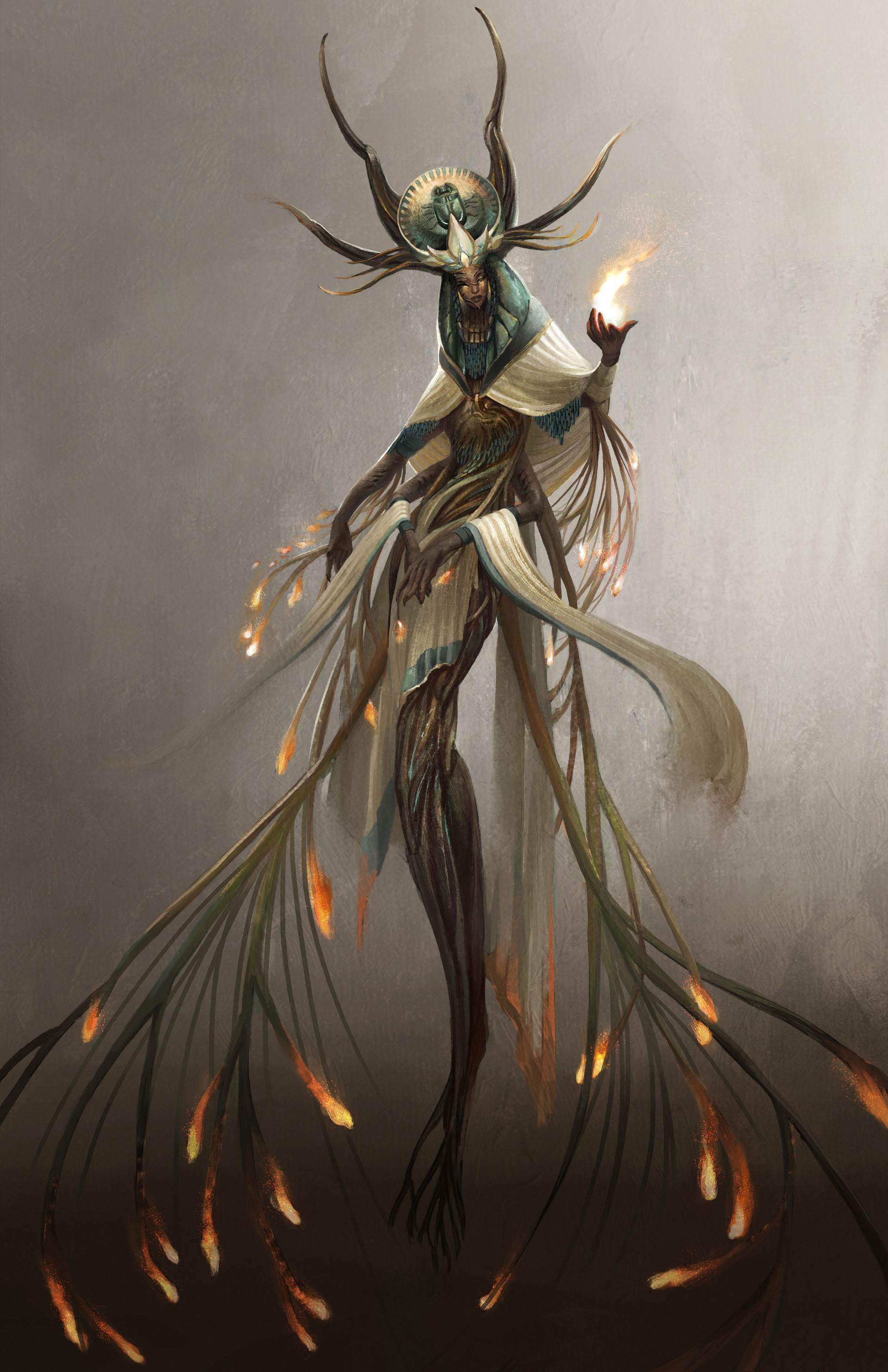

Priestess, by Mahealani Rodrigues

Ishrar, Saint of Roads 

Never satisfied in one place for long, Ishrar saw many lands and tried always to leave any place she visited better than she found it, a difficult feat at times. Her followers are almost all nomads, and oftentimes traders though she mainly lived on the land.

Body: feet

Symbols: orange, cooling wind, daisy, opal, deer, spear

Task: come to a place you’ve never been

Boon: your step is sure, and you will not tire until you next stop walking.

Amarin, Saint of Battle

A mistress of weapons and all manner of fighting styles, she sought power but struggled with an inner rage that often drove her to unwarranted violence. It is thought that later in life she was able to find peace, but to this day many of her followers seek only might and care little for the restraint she tried to uphold.

Body: teeth

Symbols: red, black cloud, carnation, ruby, tiger, lance

Task: defeat a worthy foe in deadly combat

Boon: you can carry one weapon without encumbrance for a week.


The Last Step, by Ignis Bruno

Meshar, Saint of Gardens

By far the longest lived of the saints, some say she still lives even to this day, hidden away deep in a labyrinth of flowers and herbs. As her teachings emphasize survival and health above other virtues, some think her followers to be cowardly. In truth, among them one can find some of the toughest, hardiest people imagineable.

Body: heart

Symbols: brown, gentle rain, sunflower, obsidian, carp, halberd

Task: go a week without injury

Boon: gain immunity to disease as long as you remain unharmed.

Zaraf, Saint of Libraries

Studious and soft-spoken, Zaraf spent so much time learning that she sometimes failed to make use of the knowledge she gained, and tried to hand down teachings to help others with that very task. Her followers are intended to be just as studious, though there is more variety in how and what they may study.

Body: eyes

Symbols: blue, starlight, hydrangea, sapphire, owl, dagger

Task: read a sizeable book

Boon: understand and read all languages for the rest of the day.
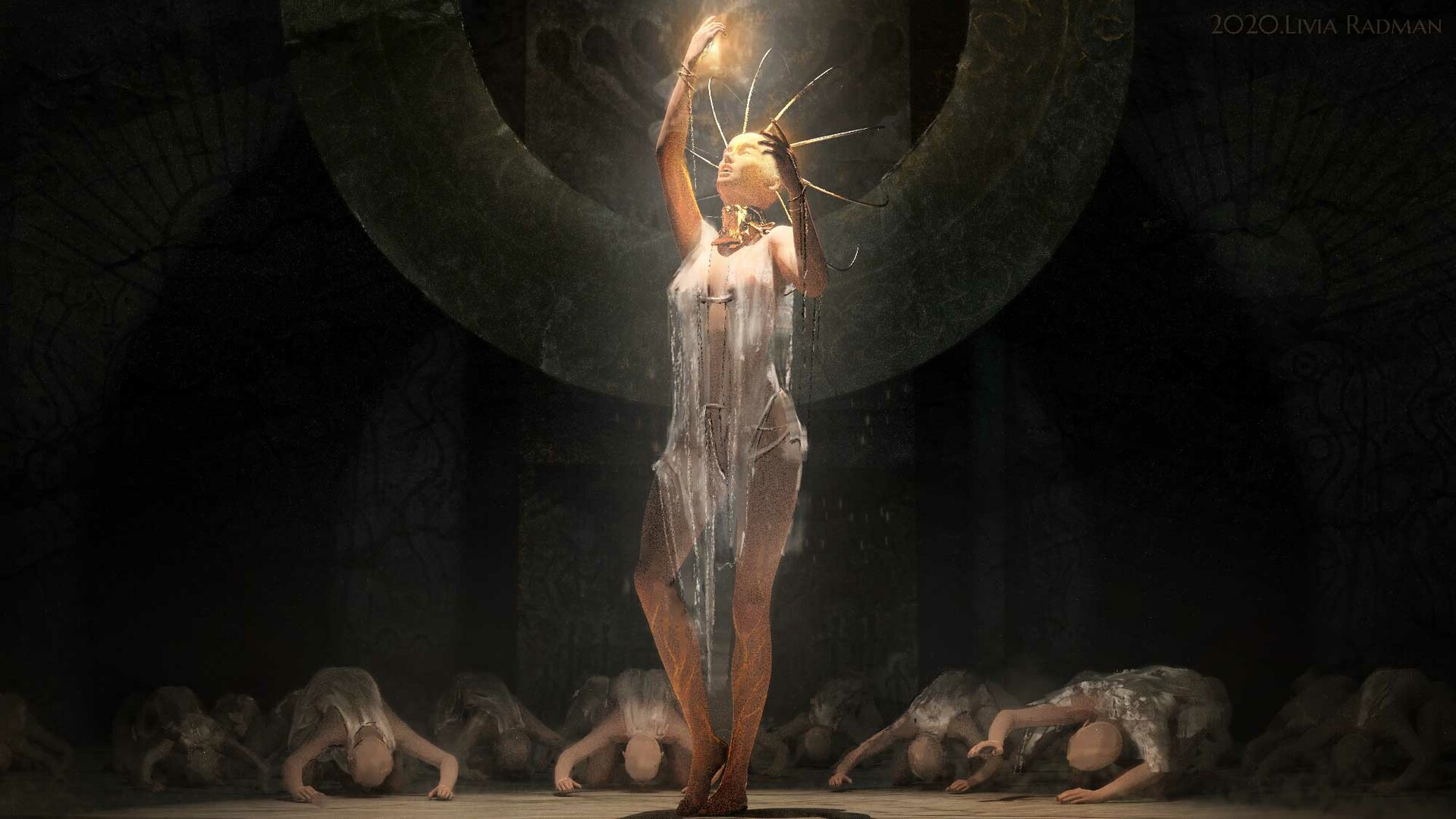

Ritual, by Livia Radman

Sunesh, Saint of Weddings

Lascivious saint, partner and spouse to many, and with nearly as many appearances over the course of their life. Sunesh was known as a generous and lively person, sometimes to a fault. Followers of Sunesh are expected to venerate them in whatever form is personally preferred, as that is how they shared love in life, and the saint's teachings emphasize consent and sensitivity to a partner's (or potential partner's) desires or needs.

Body: hands

Symbols: pink, full moon, rose, emerald, dove, whip

Task: spend a night or day with a lover

Boon: for the rest of the week, you can tell if love is true.

Niket, Saint of Home

Amarin would be the first to tell you that Niket was stronger by far. However, Niket struggled to keep up with her siblings and eventually learned to build, her creations eventually becoming the city of Il Kamiyar, the Great Bridge. Her followers congregate their, but can also be found striking out elsewhere, to spread that industrious spirit.

Body: shoulders

Symbols: green, warm sunlight, orchid, peridot, sparrow, axe

Task: sleep within a building you helped create

Boon: you can lift one object and carry it, so long as you could drag it.
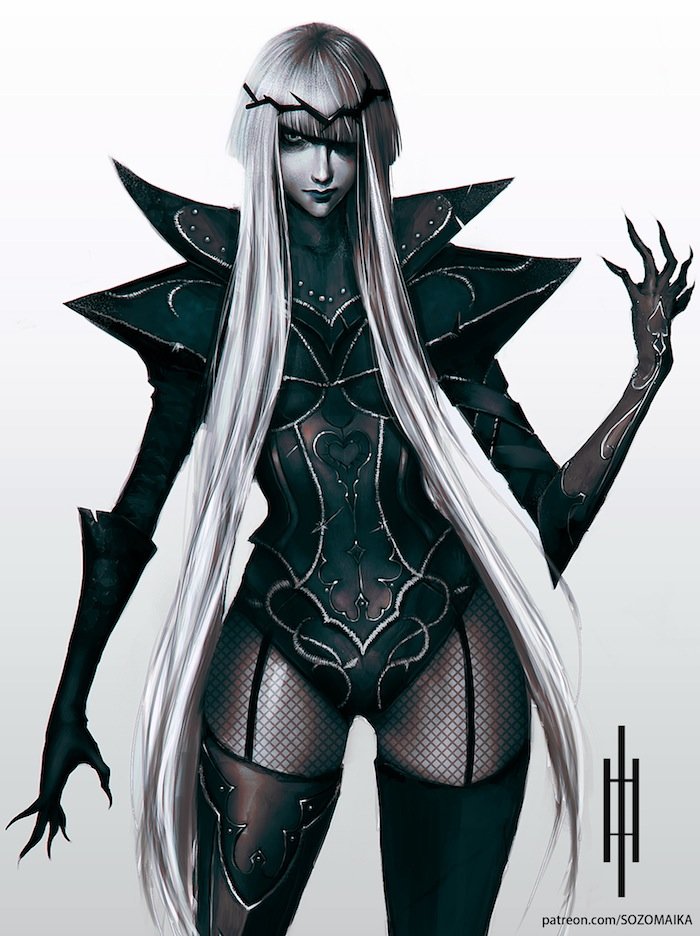
 

Alexandria the Black Mage, by Maika Sozo

Tevresh, Saint of Blasphemy

Said to have betrayed her siblings, they cast her out and tried to erase her memory. However a memory cannot be so easily suppressed, and may only become more resilient with each attempt to exterminate it. Those scarce teachings that can be found from her time ecourage one to abandon their duties, reject any role or path set out for you and struggle alone if you must.

Body: scars

Symbols: black, new moon, windflower, howlite, moth, broken sword

Task: destroy a shrine, or kill a leader

Boon: the next time you could die, fate may be turned aside.


Notes

I've been trying to come up with ways to engage the player with the setting more, and a huge part of that is religion. Historically religion has always been a very important in life as well as fantasy, but it seems like a large portion of the gaming community (myself included), are atheistic, so that sense of worship and service to a higher power can be... off-putting. It creates a divide between the player and the average person in the game world, their analogue.

Thus I create instead aspirational figures, so that even the most power-gaming edgy anti-theist could start from a point of "oh yeah I want to be cool like that person," and then once the player is engaged with these figures I think it becomes easier for them to shift that engagement toward roleplaying something more spiritual or worshipful. I've been told that D&D also has demi-gods and high priests and what not, but that doesn't really address this rift between the player and the average character in the world, instead making it probably wider by suggesting that we roleplay worshipping something that isn't even a god? It feels strange.

Oh hey, Skerples recently made a few blog posts about saints and gods and all that jazz. Hope they like this (or at least see it).

Saturday, October 19, 2019

Saint

Inspired by a wonderful suggestion by ArkosDawn, which lead to the first cleric I would actually encourage people to play as!

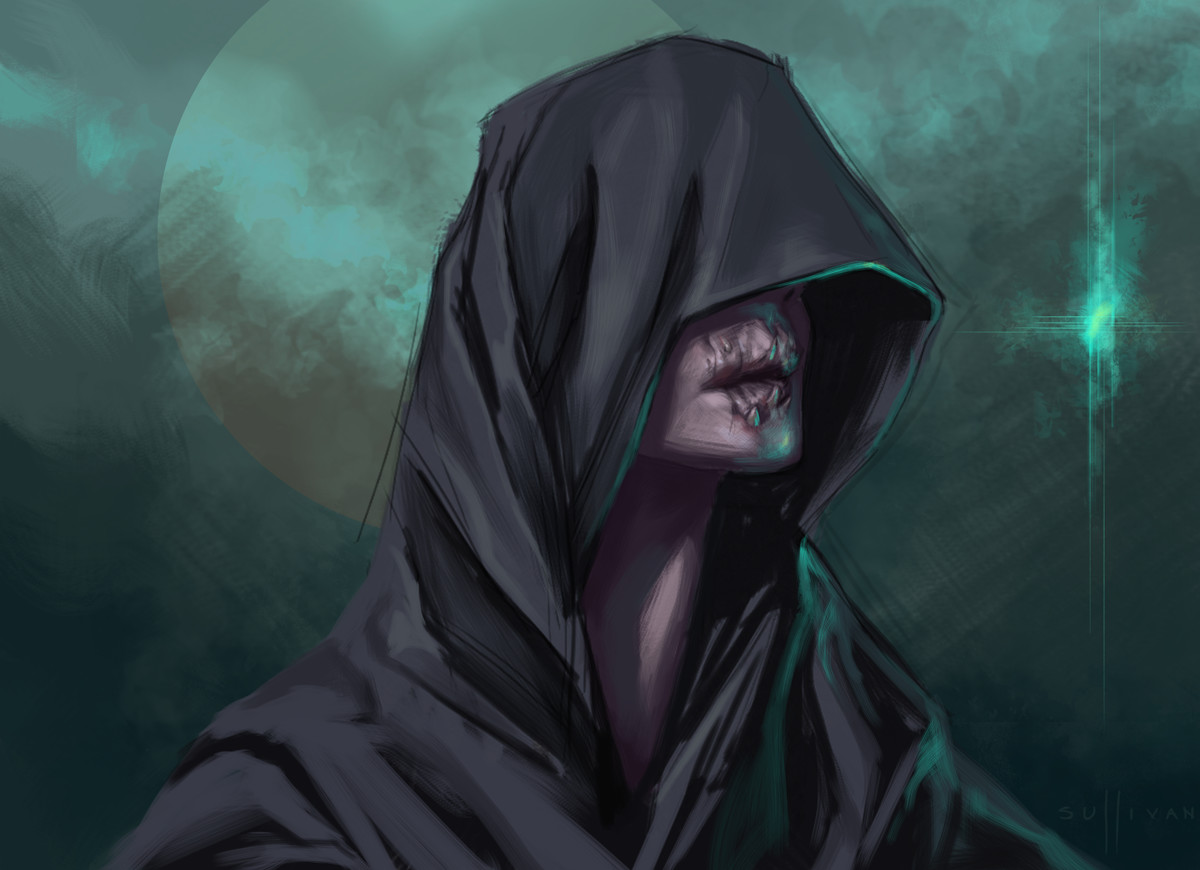
Lepro-sees by John Sullivan

Perform miracles by accepting temporary curses. Magic user.

  • Stat bonus: +1 speed per level, -1 maximum vigor every two levels
  • Starting items: incense, steel cudgel
  • Skill: politician, writer, or thug
Level 1: miraculous
Level 2: burden, smite
Level 3: forbiddance
Level 4: divine retribution, relic
  • Miraculous: perform miracles by accepting minor curses upon yourself. When you choose a miracle, roll 1d6 for a curse, adding +1 to your roll for each miracle you have used in the same day. Curses last the rest of the day unless otherwise noted or if that wouldn't make sense.
  • Burden: once per day, select an enemy when you use a miracle, inflicting them with the curse instead of yourself.
  • Smite: strike your foe with divine power once per day, dealing +1 damage for each curse you are afflicted with. This includes major curses, curses from techniques, and cursed items.
  • Forbiddance: place an icon that will repel one enemy type whenever they look upon it, for the next 8 hours. Can be used once per day, and enemy types include magical beasts, gods & demons, elementals, cursed & undead, fae, natural beasts, and humans.
  • Divine retribution: once per day, spread one curse that afflicts you onto an enemy. They will be alleviated when you are, or can release their curse separately.
  • Relic: give a piece of your body (such as a tooth, a small vial of blood, or a lock of hair) and a blessing to one person at a time. As long as they hold your relic, it will protect them from any kind of curse, but they will also be unable to use magic.

Miracles
  • Heal an ally within sight by 2d6 vigor.
  • Increase the recovery of a wound by one day.
  • Call upon a lost item to return to its owner, through anything but solid barriers.
  • Grant an ally +2 strength and agility for an hour.
  • Endow a flame to keep burning for 1d6 +2 days.
  • Steal a magic power for one hour.
  • Split a single stone with a touch.
  • Dispel temporary ailments such as blindness.
  • Conjure 1d6 rations worth of food.
  • Split a body of water to cross safely and dry.
suffering by ivan stan


Curses
  1. Lashed by spectral whips for 1d6 damage.
  2. Stricken with hunger, eat 1d6 rations or become strained.
  3. Legs become limp and useless.
  4. Skin disappears, taking +1 damage from all sources.
  5. Arms chained behind your back.
  6. Stricken with silence. Cannot use another miracle for 1 minute, or speak for the rest of the day.
  7. Flesh becomes salt. Take 1d6 damage from notable contact with water.
  8. Invisible imps perch upon you and strike anyone who approaches to help you.
  9. Lose control of your actions. After 1d6 rounds, GM controls the saint for one minute.
  10. Become stiff and immobile for 1d6 rounds.
  11. Shrouded in a nightmarish illusion. People won't talk to you, guards may attack.
  12. Stricken with poverty. Armor, shield, or weapon burns away in holy flame (only one, in that order).

The church is powerful, the people have their faith. Why then, would a lowly peasant ever shy away from the powers of the gods? When there is a holy light of healing, a conjured meal before them, or a demon slain with a touch, how could any deny the privilege of such a position. They hesitate at the sight of a stricken saint, bearing the heavy spiritual weight of their curses after a trying day. That power is great, truly, and holds a position of some guaranteed safety under the church, but such suffering is well more than enough to push away thoughts of joining the orders, until true evil makes itself known and someone with faith enough to become a saint also finds suffering enough that those curses seem worth enduring.

Saints can be adapted for specific gods or religious orders, simply by creating a themed set of miracles and curses. I left off the curses at 12 because I figure by the time someone is carrying around six curses they're not likely to keep pushing that envelope.

Wednesday, October 16, 2019

Playable races

In my game there are no racial attributes, so players could easily be an elf, orc, dwarf, or any of these more interesting options. GMs can also feel free to come up with whatever new races they like, as long as they could reasonably function like a human.

Cikrem

Nomadic tribes found throughout the land, recognizable by their brightly colored skin, hair, and eyes. It's not common for them to intermingle with other tribes, but many tribes hold to a prophecy that a golden Cikrem of combined houses will unite the tribes and bring peace to their kind for millenia.
Their clothing tends toward dull, neutral coloration that contrasts with their vivid skin, and large, elaborate cowls or hoods. Cloaks, capes, and scarves are quite common in their fashion.
Many of them worship gods of light, such as flames, the sun, the moon, the stars, and glowing creatures from deep caves and odd seas.

Trip through Space by Kaya Kepa

Mebirinu

Peoples from the dense underbrush of the woodlands, they are known for their black blood and bones. Because of these traits, they are believed to have poisonous flesh, and an affinity for similar dark arts.

Kippil

Mountain dwellers who possess an extra joint in each of their arms and legs. Most find them off-putting and they are frequently assumed to be sneaky or agile, despite the famous kippil mercenary group named the Steel Cranes. In their homelands they often dig deep into the mountains and even have a few cities beneath the stone.

Veshkin


People with crystalline, iridescent hair and nails who call the deserts their home. It is a common belief that they are naturally honest and helpful, a fact which Veshkin thieves and scam artists do well to take advantage of.

Diamond by Harumi Namba

Tula

Inhabitants of cavernous valleys who possess broad, blunt horns on the sides of their head. They tend to be either very tall or very short, with average height Tula being considered rare and unattractive. Additionally, they are viewed as stubborn and brutish, although they culturally prefer diplomacy and negotiation over warfare.

Fahd

A short race of humans whose bodies are covered in long stiff hairs that extend outward. Their language is quite fast, sounding chittering and confusing to outsiders, but it is quite comprehensive. Most tend not to wear clothing, and their natural hair generally covers them very well. In fact, it is considered more obscene among their people to shave than it is to be publicly nude.

Gollo

People with hanging flaps of seemingly excess skin. They possess advanced medical techniques and have an elaborate culture around healers and the gentle fending off of sickness.

Yingao

Denizens of the Great Umbral Forest, so overgrown that there is no grass growing under the shadows of the trees. Coming from such an environment, these people have a very faint glow about their eyes and mouths (including their saliva), and their skin tends to be dark with a greenish tint.

Ort

An empire of pale humans from frigid forests across the sea. Their skin has darker and lighter patches, and their teeth are unusually long and sharp, with unpleasantly small round eyes. Many of them were once united in a conquering empire, and most claim lineage to those days, though most others peoples have little fondness for that era.

Finnin

Smaller of stature but strong of will, these people live in large but close knit communities and are somewhat well known for their large, colorful, singular eye. Despite having only one eye they are quite expressive, and in some black markets their eyes can be purchased as a youth restorative or material for fortune telling.

Shimex

Oft alienated for their completely smooth bodies, without a hair to be found, nor nails on their fingers and toes. Their culture prohibits conflict or selfishness, but they have a reputation for being conniving and tricky. Generally they are very quick to integrate into new cultures when given the opportunity, and adopt new customs well.

Nihemi

A tall people with silvery skin and four, narrow eyes. They have a predilection for long robes and fine silk, and have a very insular culture.

Bolshu

People seemingly swollen with excess blood, with bodies bloated and tinged purple. They use their blood in a number of holy rites, and have a tendency to see the blood of other races as impure or cursed.

-

Far races

If you want to run a really out there or gonzo game, here are a few more wild race options that players might be interested in.

Wermlen

Beings that build cities in huge immutable metal rings, most of the time buried deep underground but always with at least some of the city on the surface. In their larval stage, they appear as eel-sized worm creatures which form small communes of five or six, which can act at the scale of a human.

Fornd

Appearing like a shrub made of clear crystal, which moves by growing in a direction and shriveling behind. The 'leaves' hold items and pass them along as it moves. Their homeland is on the ceilings of vast underground caverns, though they cannot pass along walls or ceilings anywhere near the surface.

Mkyek

Appearing as what we would recognize as a human fetus, though a little larger than a watermelon, flowing in the air surrounded by an orb of fluid and a wavering field of delicate energy. Any items it possesses are held in this field by moderately strong, short-range telekinesis. Originating from hidden moons, they claim to have built the world but this is a myth.

Vriitikra

Featherlike beings which are iridescent with flexible, strong filaments that usually wrap into a tubelike shape, and can thus hold items. They are able to change colors, and it is thought they were once able to perfectly recreate a human appearance.

Dwalm

Scaly tentacled beings with around nine long, flexible limbs and a round, spine covered body. Their limbs must coil together to hold the body upright or lift most human made items. They were created by a passing comet, which caused them to grow out of naturally formed mirrors.

Ayectraiv

Another floating race which looks like several rods of glass each holding a shimmering goo. At the tops of these rods they are open, and the goo extends upward into a more shapeless mass, which can use items. They say that in their realm, the glass is not necessary, and they can take their natural, majestic form.

Tuesday, April 25, 2017

Followers of the Shattered Path

Many have heard of the New Map, the enormous library of records and charts kept by the Markers of the Shattered Path. You have likely met a Walker of the Shattered Path, travelling on a Shard to add to their tales. But few realize the full scope and history of the faith.


The story begins with their origin. It is said that the makers created our world, and when they had finished, devised the First Map. It held record of all things in this world, including the hidden road to paradise. However, the Unwalker refused to leave mortals with the First Map, as it could only travel where we have not tread, and so it stole the map so that it alone could know the path to paradise. When all things are discovered, the last Follower of the Shattered Path will find the Unwalker, and will guide all mankind into paradise with the First Map.


Those who seek the Unwalker are known as Walkers of the Shattered Path, and are known far and wide thanks to the inquisitive nature of the sect. It is possible for anyone to become a Walker, so long as their heart is free and their life is a journey, but there are a few simple rituals required to become an official member.


One begins their journeys as a Seeker of the Shattered Path, travelling with an elder Walker on one of their Shards. When the journey is complete, the Seeker will then record it in the New Map, writing their story and crafting their maps. Here they decide whether they will go on to become a Walker or Marker.

Markers are the scribes and recorders of the order, scribing the journeys of every Walker in their Shards, adding to the New Map with tales and maps of every exploration. They are reclusive, though it is not unheard of for one to journey in search of their own Shard, even after finishing their Seeking, it is considered uncouth to do so repeatedly.