Showing posts with label martial. Show all posts

Saturday, August 29, 2020

Fantasy Chainsaws

 Bit of a weird project, but if you ever want to include some form of chainsaw in your fantasy games, at least one of these should fit the tone. Maybe that's just me! If you're doing full gonzo, go ahead and roll that wonderful d20.

1. Lotus Petal Saw

Softly shining, pink petals spin along an ornamented bar, conjured by a Blades of the Endless Wheel mantra.

https://pbs.twimg.com/media/EfAiFXWXgAE_ENW?format=jpg&name=large
Exactly this, by me


2. Thornwheel Blade

A great enchanted rose bush, grown by fairies to have a rotary thorned stem.

3. Jaguar Claw Macuahuitl

Empowered by a jaguar spirit, its many obsidian blades command incredible cutting power even when swung like a normal sword.

4. Necrospinner

A spinning weapon of animated bone, using fangs and teeth along the whirling edge.

5. Meatcutter

So named for cutting meat as well as itself being meat. The blade is comprised of sharp, hardened claws, and it spews its own blood when spinning.

6. Crystal Prismus

Enchanted weapon of polished stone and gems. Each tooth is a different kind of gem, and they can create a glinting rainbow of slicing power.

7. Brimstone Spinblade

Spewing hellfire when it spins, the heat of its flames can burn through steel as well as any warhammer punches through.

8. Starlight Spinner

An elven weapon of silver, hammered as fine as eggshells, with a radiant blade that captures the light of the stars.

9. Slimesaw

Somehow when spinning, the goopy edge of this blade cuts much faster than the slime can normally corrode.

10. Classical Sparksaw

Ancient spinning blade crafted of olive wood and bronze, spits blue sparks as it spins. Made by a brilliant inventor centuries ago.

Image
Ancient Bladesaw, from Zelda


11. Trimerian Sawbeetle

The curious horns of this giant beetle can spin to cut through wood or, presumably other Trimerian creatures. They are carefully bound to be used as tools.

12. Winding Sharp-Frost

 Unnaturally hardened frost, spinning and cutting with a fractal edge.

13. Whipsaw

A bladed whip that can be activated to coil in an elongated shape, spinning to cut more effectively, in exchange for shorter reach.

14. Terracotta Blade

A living clay weapon that spins with razor sharp clay shards along a lengthened edge.

15. Runic Stormblade

Constructed of tin and pewter, by wizards. The runes etched into its surface conjure the vortex of a storm into its crackling, whirling edge of deep indigo lightning.

16. Gilded Relic Blade

Built of marble set with gold and finely cut gems, this spinning blade contains a warrior-saint's fighting hand bones, and radiates with divine cutting light.

17. Trimerian Wasps

Angry insects that have been specially bred and trained to fly in a long, rounded formation and devour anything they touch. This was the only formation in which they wouldn't turn back and attack whoever holds their hive.
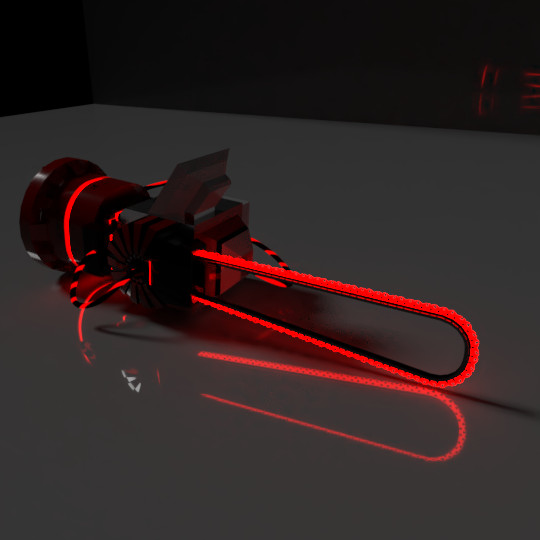
Lasersaw, by Andrea Sibilla


18. Jade Dragon's Fang

Gifted by a divine being from an unearthly realm, it is surprisingly easy to carry.

19. Spectre's Wrath

 As ghostly mist whirls and spins, the hatred of the dead calls out in a hollow wail.

20. Splitting Organistrum

The powerful tune of this slow instrument projects a small aura of cutting sound near its neck when played properly.


Many of these were inspired with help from Gal Paladin on Discord!

Wednesday, August 5, 2020

Combat systems

The point of combat

My goals when designing a combat system are that it should first have enough dynamism to not be a solved game or rote repetition, second be as simple as possible, and third be as realistic as it can. The order there is very important. I do not want to play a tabletop RPG that is mostly or entirely about combat, that's something I find video games will always have the advantage at, in terms of providing an exciting, tense experience. So here are three of my favorite attempts I've made at creating the kind of combat I'd want to play.

 
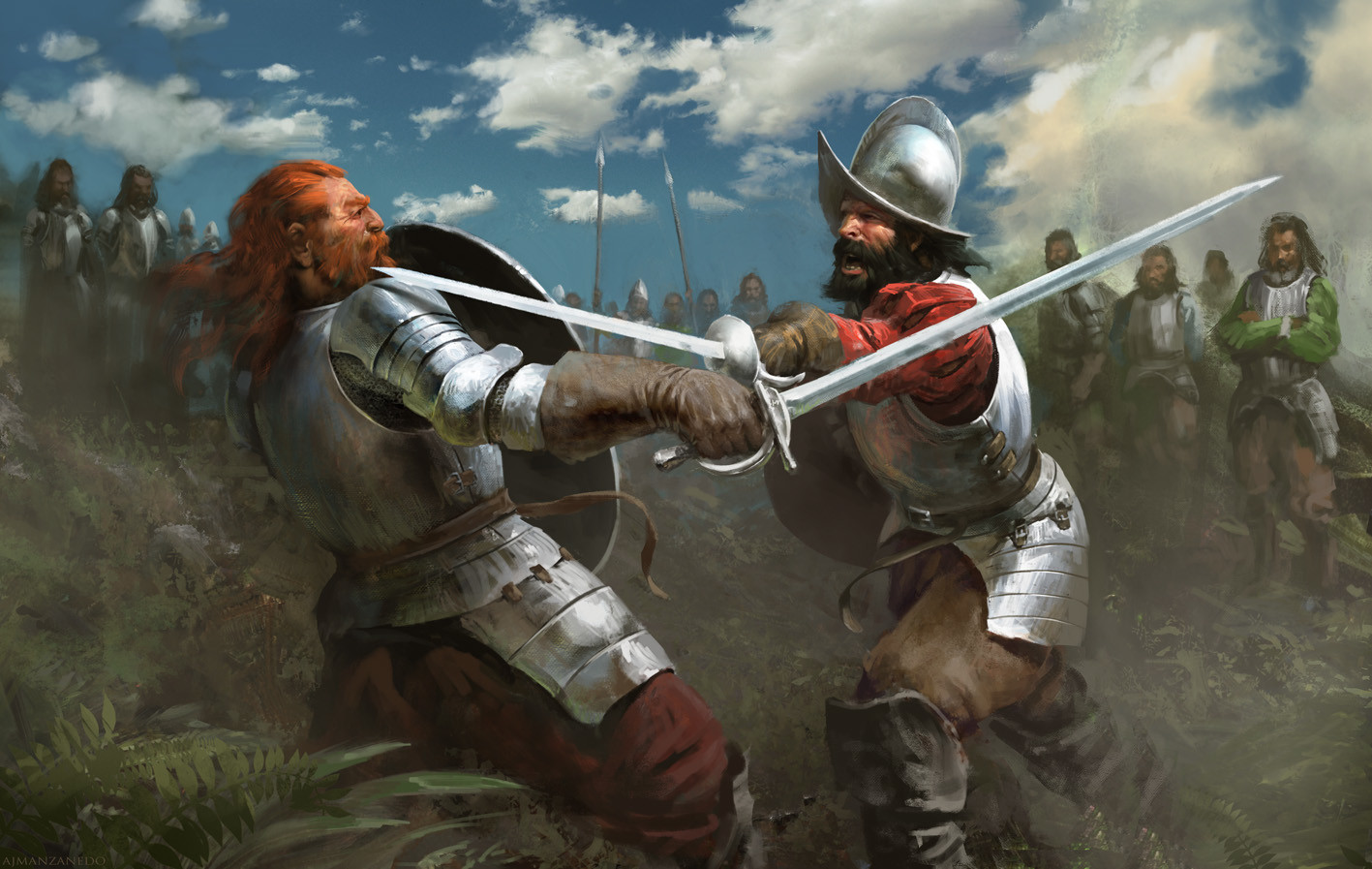
Duel by Antonio J Manzanedo

Three Hand Duel

There are three combat stances: fast stance, parry stance, and feint stance. Parry beats fast, feint beats parry, and fast beats feint. Anyone can use fast stance, anyone with a weapon (or specialized unarmed training) can use parry stance, and anyone proficient with their weapon can use feint stance. Anyone whose stance beats opponents’ stances deals damage dice plus bonus damage. Anyone whose stances matches their opponent's both deals and takes bonus damage (but not damage dice). Blocking stance is available if you have a shield, allowing you to roll a 'damage die' that will reduce any damage you take in the following round. Weapons and high strength increase damage, armor reduces damage taken.


Advantages: pretty complex without being hard to use, gives plenty of active decision making opportunity to players. Inherently feels flavorful because you're declaring how your character will fight. Easily scalable up to mass combat with something like charge, flank, route or similar (I haven't looked into medieval battle strategy). It also addresses the massive threat of being flanked, as both opponents can doom your options. There is also some opportunity to add special stances as class abilities or other kinds of specialized combat training, but this should be done with extreme care. Also runs faster than most dice systems, because someone is always taking damage.


Challenges: make sure you choose what your stance will be before you ask someone, you'll probably want to write it down. Honestly cards might work for this purpose. Also a bit hard for people to wrap their head around if they're not familiar with the terms, but they can be easily equated to rock, paper, and scissors (obviously what the system is based on). Also if you're unarmed or not proficient, there's always a best choice against you, so that's iffy.


Battle by Faraz Shanyar
 

Behind the Blades

Each character has a stamina stat. Before the turn, they can invest however many they want into offense and defense respectively. If one side's offense totals higher than the other's defense, that amount of damage is dealt. Armor and shields add fixed defense points, weapons and strength add fixed offense points. Possible additional rule: one may invest a third of their stamina in a 'guard break' that reduces enemy defense to zero. Stamina may lower each turn.


Advantages: very simple, very deadly. Again, possible to add special moves with a fixed stamina cost, or a fixed portion cost.


Challenges: again relies heavily on not knowing what the opponent will do. Even more so, knowing the enemy's stamina can potentially cause problems.


Spilled Wine Drawing

11"x14" Prismacolor pencils on Dura-lene acetate.
Spilled Wine by Daniel Landerman (NSFW warning)
 

Steel Ruckus

An attack is a d20 roll. If the result is higher than the opponent's defense, the attack is successful, and you can either strike them or shove them away. The first strike throws you off guard for a turn. If struck while off guard, you are wounded and unable to fight until healed. Strikes can be either deflected or absorbed, with a weapon or tool you are holding. Deflecting causes you to drop that item, while absorbing the strike damages the item. It takes one turn to attack, close distance (such as after being shoved), run away, grab two items from the ground or your belt, or grab one item from a container within reach (like your backpack) or from another belt in reach. Armor and shields add to defense, weapons and combat training add to attack.


Advantages: most compatible with D&D style combat systems, which includes a lot of OSR stuff, so conversion of existing combat should be a lot easier. Lots of potential for environmental fun, like shoving people into hazards (down stairs, into spiders) or dropping a weapon out of reach (off a bridge, down a cliff).


Challenges: the way shoving and running away work, there should probably be a similarly robust chase system. That seems like fun, but it is a challenge. Should also come with somewhat strict limits on what can be hung from a belt, lest players simply load their waist with spare weapons and shields.


-----


If you've been following for a while, the Three Hand Duel was what I was using for my Skies Below stuff. These are still broadly in chronological order, in the order I came up with them. I'll probably stick with Steel Ruckus for the time being, and flesh it out with more details in the future.

Saturday, February 8, 2020

Killers, competitors, and pursuers

Hunters of Blades

The greatest of warriors can only live in a river of blood. They must cut their way through any who would stand in their path, and must cut away all who approach in challenge. So it is for they who hold the Final Knife, a powerful dagger which can pierce any target, feed on blood, and sustain its bearer. To a Hunter of Blades, this bearer is known as the Quarry, the mightiest among them and also the target of their order. They seek to slay the Quarry and take their weapon, by any means possible. There are many hunters, and only one Final Knife, though within the order are a number of artifacts in their own right, each possessing that same preternatural ability to sever. Any who pursue Shekull, the current Quarry, may call themselves a Hunter of Blades, but only those who have killed and claimed one of these artifacts is a true contender.

Blood Armor by Alexander J

Honor Bearers

The stronger a foe you face, and the greater of their strengths you strike against, the more honorable your contest. Long ago, the Mail of Honor was rent, each ring of the invincible chainmail separated and scattered far across the realm by means unknown and unimaginable. Each of those rings holds a tiny fraction of the mail's incredible power, but those who have gathered them cannot wear it until the day they unite them all. There is only one way to do this, they have found; through fair duels. The Honor Bearers have long known not to kill their fellows, as the links they hold will only flee and become lost once more. When two knights challenge each other however, they find themselves encircled in golden flames, and wielding similar weapons. The flames serve to bar escape or interlopers into the fight, and the weapons do no harm save for taking a link from whoever's flesh they first strike, and granting it to the victor. One can enter into this order by either finding a Link of Honor in the wilderness, or by convincing a knight to duel them despite yet bearing no links. It is said that whoever finally wears the Mail of Honor will become truly invincible and unstoppable, but they have contested for decades and none are closer to success than years more of victory.

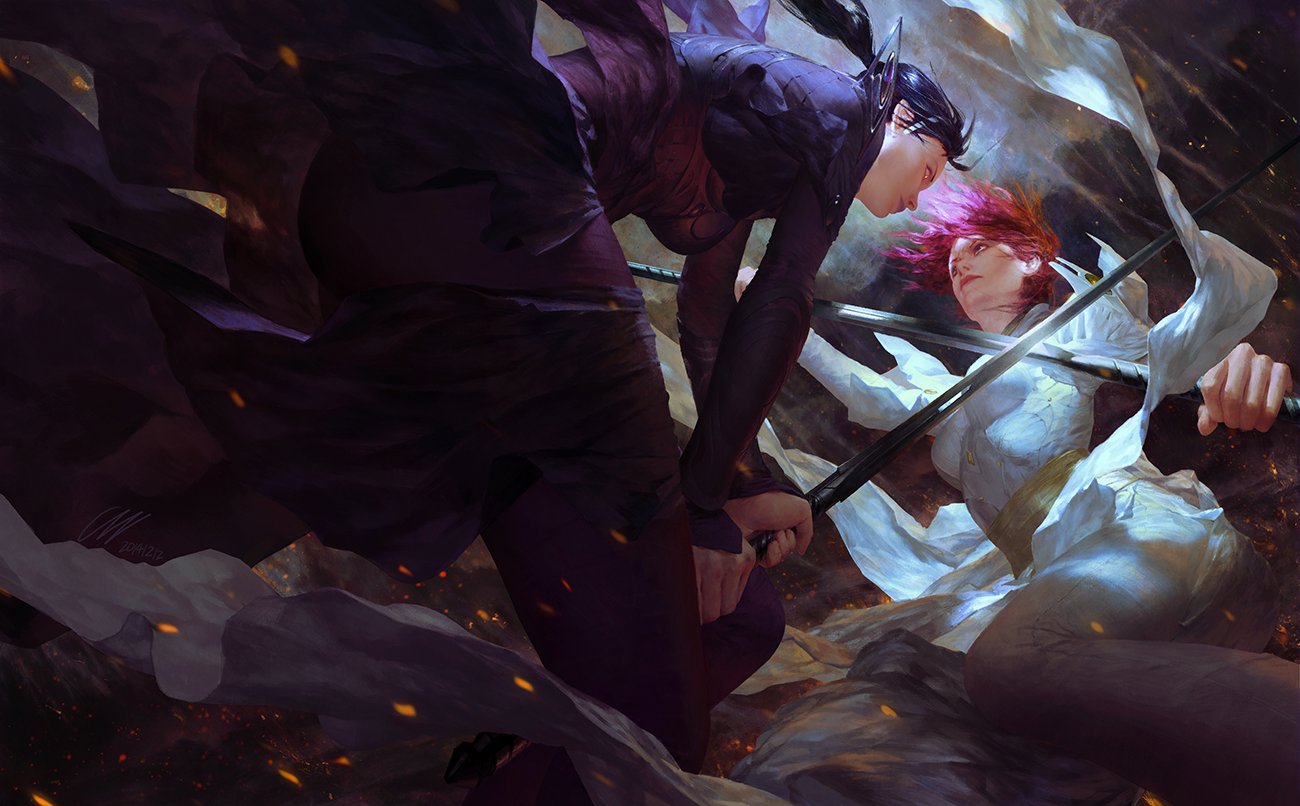
Duel of the Fates by Zezhou Chen

Pursuants

Speak no oath unless it may be the last thing you say. There is power to be had if one seeks an old Appellant and slays them, power to be drunk from their clay skulls and eventually bled back into the Hungering Well when the slayer becomes and Appellant themselves. The well's Pursuants each have taken up a cause, and proven themselves worthy of its gift by defeating one of those half-living hosts, the remains of another who has fulfilled their own final duty to themselves, in doing so giving up that self to the means of another. The worth of those who aspire to quest must be challenged, for the failures leave the well's power to trickle out unattended, into the world beyond it. Perhaps once the well itself was some god, spirit, or knight, driven by its own willful purpose, driven eventually to seek power and become an eternal cycle of purpose, power, and exploitation. Now there is no means by which it can be gleaned whether this was ever true, or even if it still is seeking out some hidden goal.

Noble Lord by Dominik Mayer

Wednesday, November 13, 2019

Combat, weapons, and health in Skies Below

To those just joining, Skies Below is the working title for my personal RPG project. Combat isn't the central focus or quite as emphasized as it tends to be in some of the more popular RPGs, but it is still pretty important in a medieval setting and I like to have a good tactical fight every now and then.

Battle by Faraz Shanyar

Vigor is the measure of a character's ability to keep on fighting, generally avoid major injury be it due to physical stamina, morale, or even luck. When damage has reduced a character's vigor to zero, that character is worn out, and the next damage they take will cause a Wound. When characters rest for an hour long meal break and eat at least one ration, their vigor is restored to full. Likewise when they sleep for eight hours, and they can drink alcohol to restore 1d6 vigor in a round.

A wounded character cannot regain vigor until they've healed, which takes one week per wound. If a wounded character takes damage, they must roll 1d6. If the result is higher than their number of wounds, they survive and take a wound. If the result is equal to or lower than their number of wounds, they become fatally wounded. A fatally wounded character can die right away, or within the week if the player wishes, but the character won't be able to continue adventuring consistently while dying.

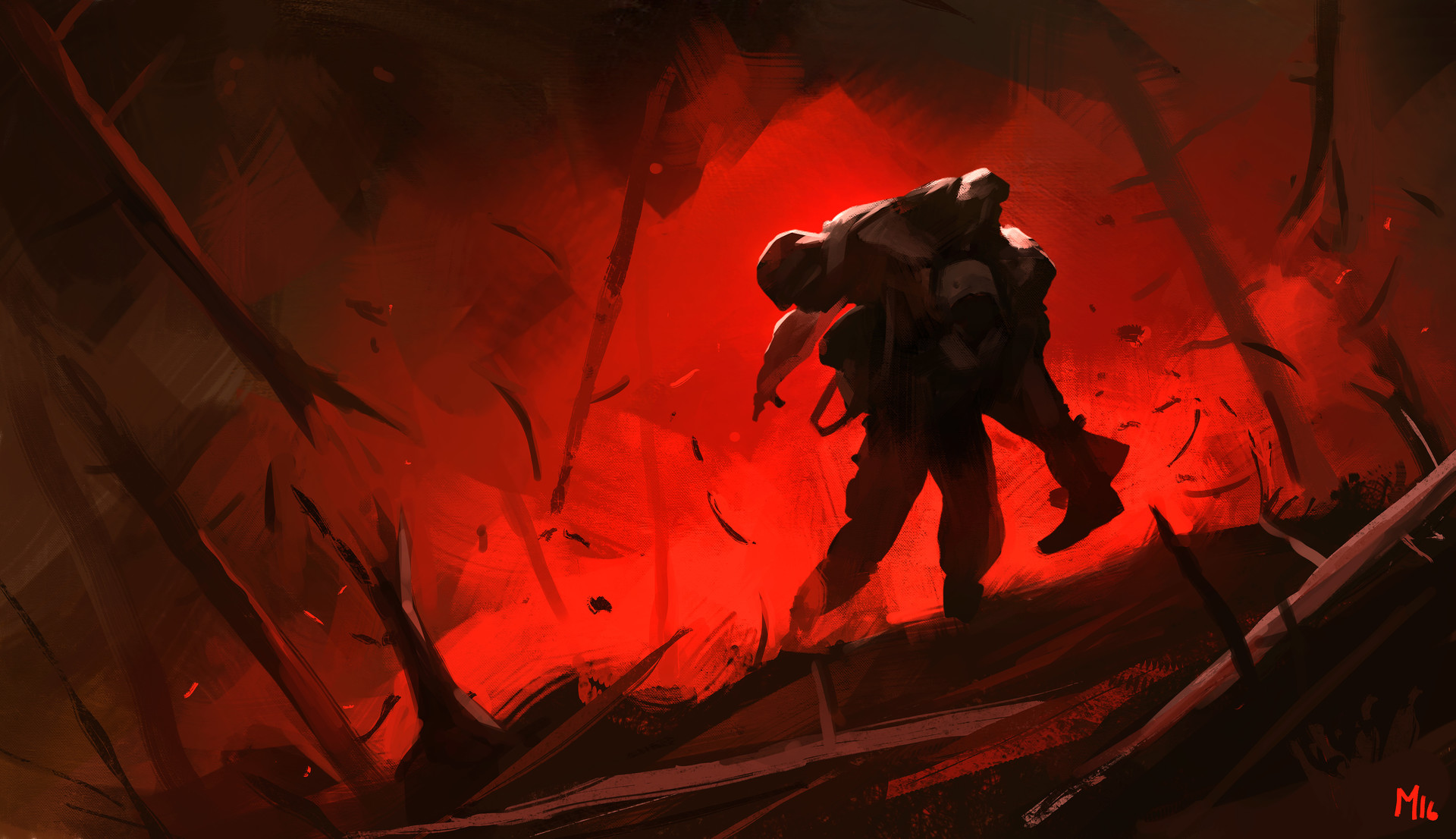
Carrying the Wounded by Dominik Mayer

Each round of combat takes ten seconds, and melee combatants have three stances to choose from; fast, parry, and feint. Much like rock paper scissors, fast stance is beaten by parry stance, parry is beaten by feint, and feint stance is beaten by fast stance. If your stance is beaten by your opponent's, you take full damage. If your stance matches your opponent's, each take 1 damage plus attack bonuses. A character can only use feint stance with a weapon they are proficient with, and can use parry stance with any weapon.

Animals or creatures of similar mental capacity can either pounce or dig in, which are analogous to a fast stance or parry stance respectively. An animal trained specifically in combat can feint, as can creatures with human-level intelligence.

There are four categories of melee weapons: light weapons, mass weapons, balanced weapons, and reach weapons. Light weapons are generally small, one-handed ones like daggers, knuckles, or a small cudgel. A mass weapon could be a mace, hammer, or axe which can be wielded in one hand. Balanced weapons include swords, spears, and other weapons that are generally longer but can be used either one handed or two handed, and have a more even balance along their length. Reach weapons include greatswords, poleaxes, and most other polearms, and can only be used with both hands.

                               | attack | defense | armor piercing |
Light weapon:         |    +1   |     +1     |           +1          |
Mass weapon:        |    +1   |     +1     |           +2          |
Balanced weapon:  |   +2    |    +2      |          +1           |
Reach weapon:      |   +2    |    +2      |          +2           |

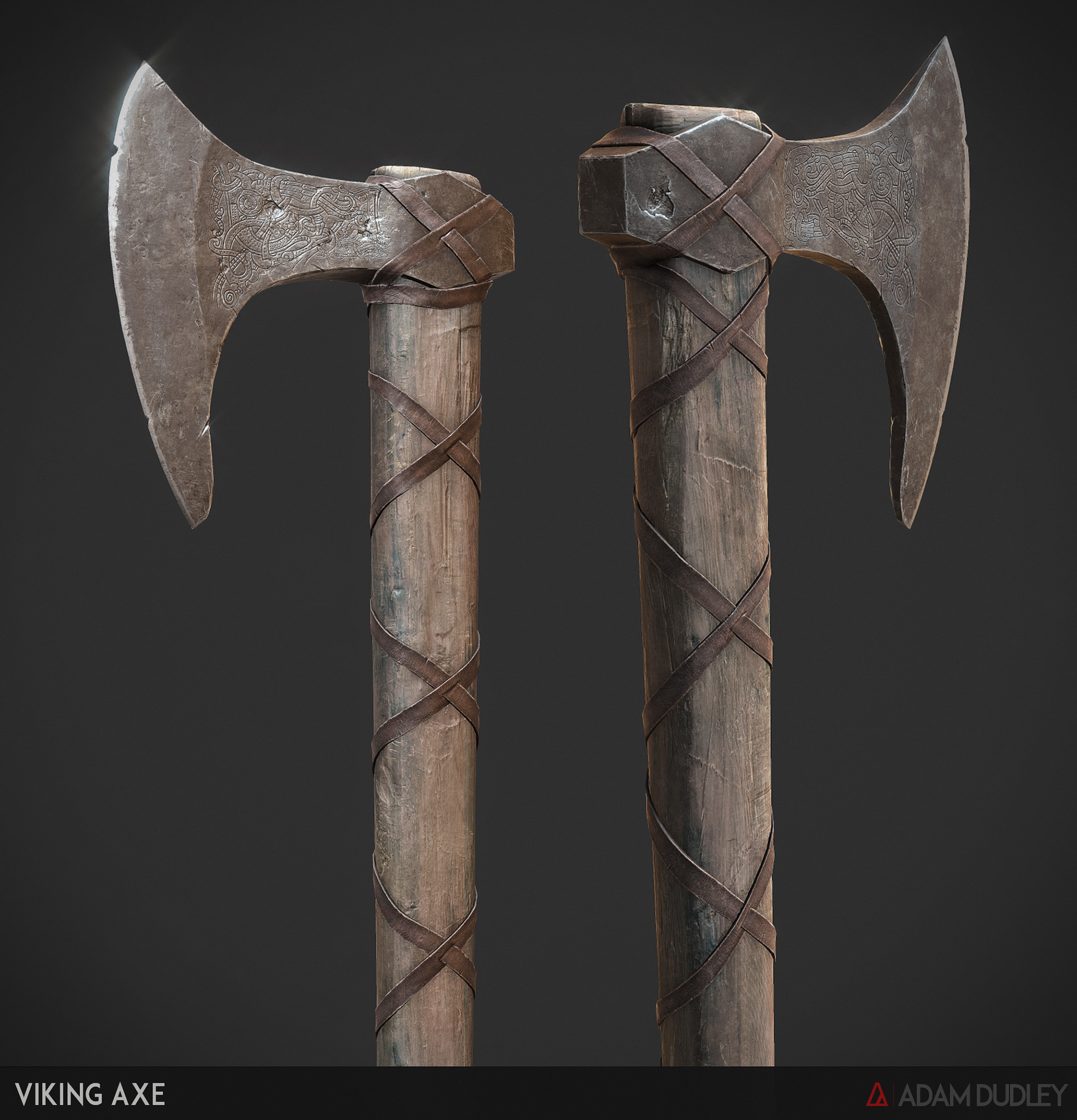
Viking Axe by Adam Dudley

Light weapon damage uses the lower result of 2d6, one handed mass or balanced weapons deal 1d6, and two handed weapons deal the higher result of 2d6. While wielding a mass or balanced weapon, a light weapon in the offhand grants +1 attack and armor piercing. With a shield, the character can choose to block instead of attacking, increasing their defense by the lower result of 2d6 with a small shield, or 1d6 with a large shield.

Ranged attacks use the a skill check each round. For thrown weapons such as knives, darts, or a sling, the launcher skill is rolled. For bows, the archer skill is used, and for crossbows or firearms the shooter skill. For a particularly difficult shot, such as trying to hit someone hiding in underbrush or out of range, the skill check is twice as hard.

A successful unarmed attack deals one damage plus attack bonus. With special unarmed training, an unarmed character can enter parry stance against unarmed enemies. With unarmed mastery, an unarmed character can enter parry stance against armed opponents.

Xiu Yin Chen by Mario Wibisono

Armor increases defense, +1 for gambeson or other light armor, +2 for chain or other medium armor, and +3 for plate or other heavy armor. If the character wears heavy armor all day, they become strained, and heavy armor takes one minute to put on with help.

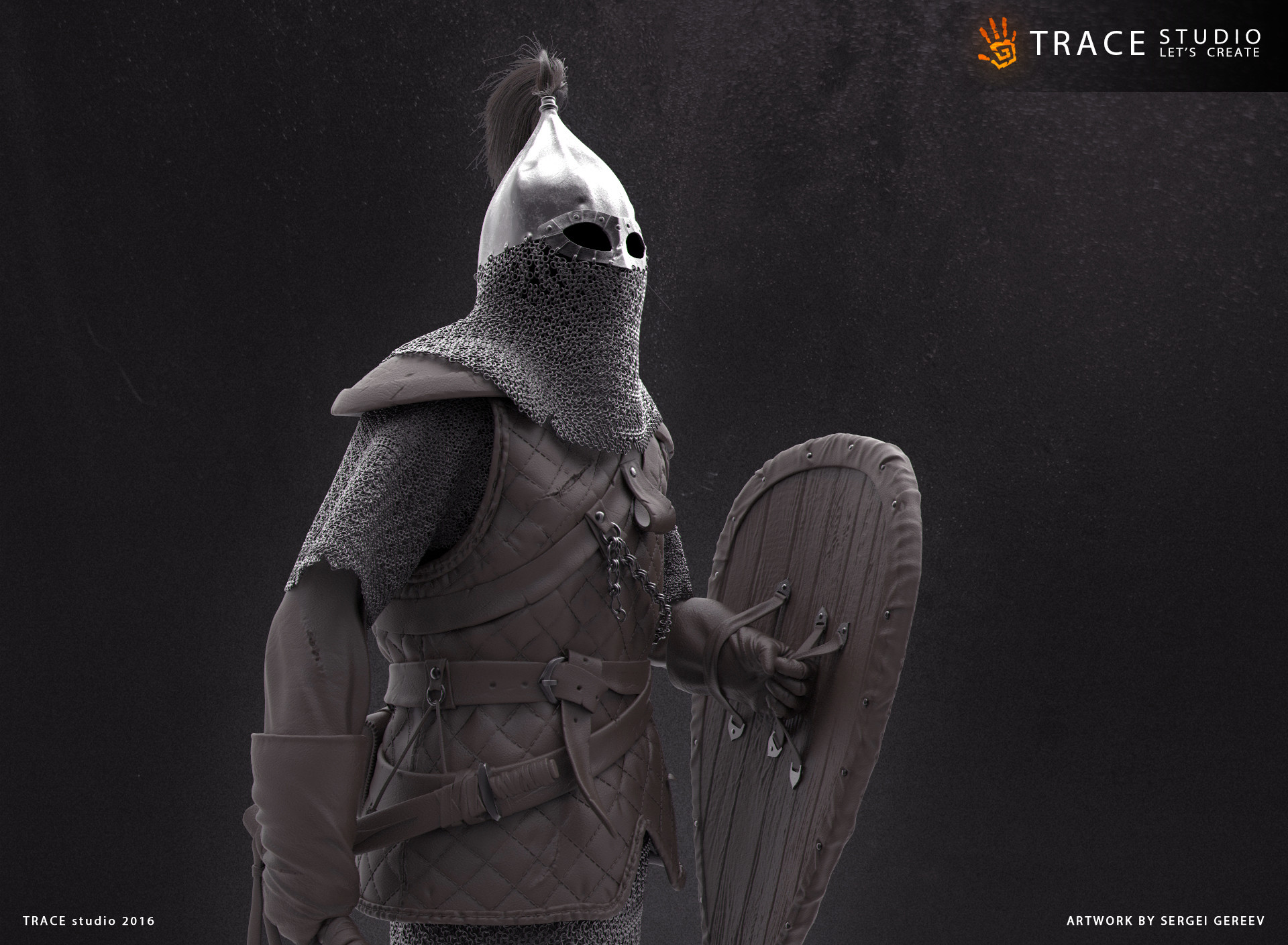
Varangian by Sergei Gereev

There are five movement choices in a round. Closing distance, creating distance, maintaining distance, racing to a target, and holding ground. When making one of these actions against a foe, such as racing against someone, maintaining distance against a fleeing opponent, or holding ground against someone trying to get past your character, each roll 1d20 and add their speed bonuses, whoever rolls higher wins.

These rules may seem a bit unfocused, but in general it's designed to focus on melee combat and create a reasonably realistic, tactical, and streamlined experience. Lots of this was inspired by https://spellsandsteel.blogspot.com/ so check out that blog if you want some really interesting real-world data related to weapons, travel, equipment, and other information relevant to a medieval fantasy type game. Sorry I missed a post, for those that noticed.

Thursday, October 10, 2019

Martial classes

Infantry

Fight well on a team, acting easily as leader or support. Combat trained.

  • Stat bonus: +1 blocking defense every level
  • Starting items: chainmail, large shield, spear (balanced weapon), lucky charm
  • Skill: archer, surgeon, or tactician
Level 1: phalanx, siege diet
Level 2: squad support
Level 3: mentor, heroic sacrifice
Level 4: team attack, rally
  • Phalanx: when you block alongside allies in the same melee, gain +1 defense for each, or +2 for each who is also infantry.
  • Siege diet: split your meals with close companions (other player characters) to each get by on one ration per day.
  • Squad support: if an ally within reach would take damage from a ranged attack, you may take the hit in their place.
  • Mentor: if you have fought alongside an ally through at least one level up, when you see them perform a non-magical technique you can declare that you will practice it, and can use it once in a later encounter. This also works for skill stars if you have the same skill, but you can only be practicing one ability at a time.
  • Heroic sacrifice: whenever an ally in the same melee would take a wound, you can choose to take the damage in their place.
  • Team attack: +1 damage for each ally attacking the same target at the same time.
  • Rally: once per day, call out encouragement to your ally and restore vigor for all who can see and hear you by 1d6.
warrior by Khoa Viet

Duelist

Focus your skills on a singular opponent. Combat trained.
  • Stat bonus: +1 defense per level when parrying
  • Starting items: gambeson, rapier (balanced weapon), fine hat
  • Skill: thug, writer, or brawler
Level 1: duel, trophy
Level 2: defensive posture, flourish
Level 3: guard break, dignity
Level 4: match and break
  • Duel: goad a target into facing you in a one-on-one fight if they fail a save. In civilized areas, the time and place of the duel must be agreed upon. Anyone else attempting to attack either of you during the fight will have -1 attack, in addition to cultural repercussions.
  • Trophy: when you defeat a prestigious foe, you may take a trophy of your victory from their person, either a valuable accessory of even a piece of their body in more brutal lands. This trophy can later be brandished to exercise their authority for your own ends for one interaction. Only one trophy can be held from a given figure at a time, and repeated use may weaken their authority.
  • Defensive posture: block with a balanced or light weapon as if it were a small shield.
  • Flourish: when you achieve an impressive victory (against a particularly tough foe, or within one round for example), you may call for unfriendly onlookers to reroll their reaction rolls with a +4 bonus.
  • Guard break: a special attack option that will lose against a fast attack, parry riposte, or feint attack, but will deal full damage against a blocking opponent as if their defense were zero.
  • Dignity: when your vigor is full and you haven't attacked your duel opponent yet, they must make a Will save in order to strike you.
  • Match and break: when you make the same attack as your foe, you deal full damage.

Cavalier

Manage engagements to fight off multiple foes. Combat trained.
  • Stat bonus: +1 speed every two levels
  • Starting items: chainmail, crest (small shield), greatsword (great weapon)
  • Skill: politician, armorer, or tactician
Level 1: rampart, hit and run
Level 2: living barrier, split focus
Level 3: imposing figure, disengaging blow
Level 4: thrill
  • Rampart: when you block, each time an enemy attacks you may choose to reroll your block defense before the next attack.
  • Hit and run: strike an opponent as you pass, or lunge in before stepping back. This requires your target to win a speed contest in order to engage in melee with you.
  • Living barrier: any failed attempt to hold ground can be rerolled once.
  • Split focus: when engaged with multiple foes, you may choose two attack options and target each enemy with one of the two.
  • Imposing figure: instead of attacking, you may inflict one enemy with a -1 attack penalty until you are successfully struck.
  • Disengaging blow: strike an opponent as you move away. This allows you to retreat while making an attack.
  • Thrill: if you wound a foe, you can make a new attack against any other engaged foe.

Berserker

Enter a bestial rage to become stronger and more reckless. Combat trained.
  • Stat bonus: +1 maximum vigor every level
  • Starting items: fur cloak, 2 hand axes (mass weapons), human skull
  • Skill: survivalist, thug, or apothecary
Level 1: rage
Level 2: brutality, adrenaline
Level 3: fury
Level 4: unbreakable, wrath
  • Rage: once per day, go berserk to become seemingly invincible and unstoppable for three rounds. This grants +1 attack and defense, as well as ignoring wounds and postponing death rolls until the rage ends. Attack choices are ignored by your aggression, causing you to take and deal full damage with only defense to mitigate it. If you rage while wearing medium or heavy armor you become strained, and if you spend a round raging and don't attack something, make a will save to avoid eating your weapon.
  • Brutality: become more skilled in fighting without a shield, increasing the attack bonus from dual wielding to +2, or granting +1 attack when wielding a weapon two-handed.
  • Adrenaline: for one round per day, treat your strength as 20. Can be used in or out of combat.
  • Fury: enter a rage up to three times per day, and each time you wound a foe while raging you may choose to extend the duration by one round.
  • Unbreakable: gain a natural defense bonus of +1 at all times.
  • Wrath: your rage now grants +2 attack and defense, as well as immunity to pain or fear based effects.

Thief

Use stealth, skill, and luck to steal and accrue valuables. Partially trained.
  • Stat bonus: +1 stealth every level
  • Starting items: blackjack (light weapon), dark cloak, lock & key
  • Skill: cook, jeweler, or panhandler
Level 1: thievery, counterfeit
Level 2: lucky, perfect crime
Level 3: slippery, change hands
Level 4: very lucky
  • Thievery: gain the locksmith and pickpocket skills with one star each.
  • Counterfeit: forge a false copy of any item you've stolen, which will pass for the real thing under immediate scrutiny, but may be caught out later.
  • Lucky: once per day, reroll any d6 roll you made, including damage rolls, skill checks, and others.
  • Perfect crime: whenever you steal something that is being actively guarded, if nobody spots you or notices your passing then you will immediately gain bonus exp equal to half of the spending value of what you stole.
  • Slippery: get a +3 speed bonus to retreat from melee.
  • Change hands: retroactively declare that you swapped one or more items with another player character, no matter how far separated at the moment.
  • Very lucky: reroll up to three separate d6 rolls per day.

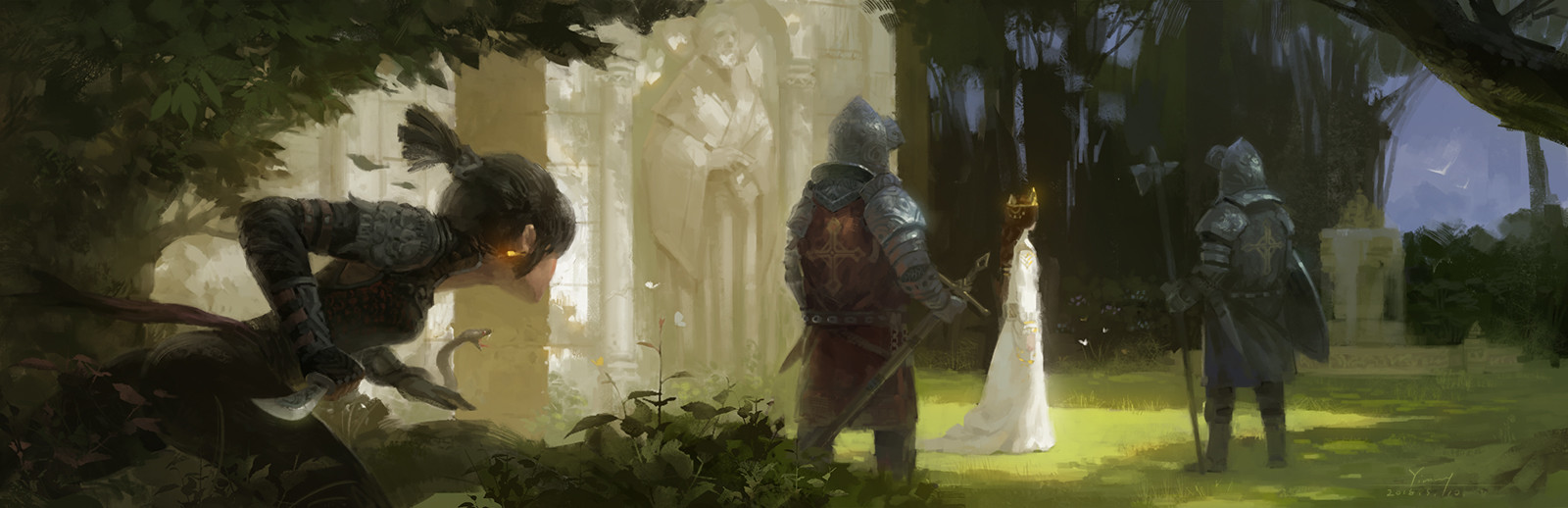
Assassination by Yiming Nie


Assassin

Use stealth and manipulation to kill without fighting. Partially trained.
  • Stat bonus: +1 to attack every two levels
  • Starting items: 3 throwing knives, disguise kit, vial of poison, contract for assassination
  • Skill: launcher, politician, or acrobat
Level 1: opportunist, assassinate
Level 2: cold read, pierce
Level 3: bet my life
Level 4: fadeaway
  • Opportunist: any time you attack with a distinct advantage, such as from behind, while hidden, or from above, you deal an additional 1d6 damage. This applies to attacks made while grappling.
  • Assassinate: for every secret of the target's that you know, gain +1 damage during the first round, up to +5.
  • Cold read: the first time you get a good look at someone, you can examine them to determine one of their secrets at random. Can alternatively be used before combat to determine what the opponent's first action will be.
  • Pierce: attacks on unaware or immobilized opponents bypass defense.
  • Bet my life: non-magical poisons that you have added to food or drink, or your weapon, will not affect you unless you wish.
  • Fadeaway: if unengaged during combat, you may roll a stealth check to disappear, and perform a stealth attack on your next turn.

Hunter

Specially skilled in subduing large beasts and laying traps. Partially trained.
  • Stat bonus: +1 quick inventory slot every level
  • Starting items: hunting knife (light weapon), trapping kit, bow, quiver, animal skull
  • Skill: survivor, butcher, or archer
Level 1: trapper, astride
Level 2: wrangle
Level 3: provoke, fast trapper
Level 4: steer

  • Trapper: create traps outside of combat to either halt, damage, or alert you when passed through. You must spend an hour every morning preparing your trapping kit. More elaborate or useful traps can be made using specific items at GM discretion.
  • Astride: climb on top of large beasts to strike vulnerable areas for a guaranteed hit. Beasts can spend their turn attempting to shake off an astride hunter with a strength save, but if the hunter spends their round clinging on, it becomes a strength contest.
  • Wrangle: using a rope, attempt to tie down a beast through a strength contest. Anyone can contribute, but any non-hunters will be knocked prone if the beast wins. Any tied down beast will remain prone until it can succeed a difficult strength save.
  • Provoke: take an action to impel beasts into charging at you. They will take 1 damage if you are beside a wall.
  • Fast trapper: once per encounter, a trap can be laid during combat. This takes one full round, and includes movement to lay tripwires or hazards.
  • Steer: while astride, a hunter can force the beast to move if they succeed on a strength contest.

Wild Hunter by Russell Dongjun Lu

Tuesday, October 8, 2019

Revised starting classes

These classes are available from the start, and players can unlock others by performing certain feats and quests in the campaign.

Warriors and Mages of Nathune - Concept by Narthyxa

INFANTRY
Fight well on a team, acting easily as leader or support. Combat trained.

  • Stat bonus: +1 blocking defense every level
  • Starting items: chainmail, large shield, spear, lucky charm
  • Skill: archer, surgeon, or tactician
Level 1: phalanx, siege diet
Level 2: squad support
Level 3: mentor, heroic sacrifice
Level 4: team attack, rally
  • Phalanx: when you block along with allies in the same melee, gain +1 defense for each, or +2 for each who is also infantry.
  • Siege diet: split your meals with close companions (other player characters) to each get by on one ration per day.
  • Squad support: if an ally within reach would take damage from a ranged attack, you may take the hit in their place.
  • Mentor: if you have fought alongside an ally through at least one level up, when you see them perform a non-magical technique you can declare that you will practice it, and can use that technique once in a later encounter. This also works for skill stars if you have the same skill, but you can only be practicing one ability at a time.
  • Heroic sacrifice: whenever an ally in the same melee would take a wound, you can choose to take the damage in their place.
  • Team attack: +1 damage for each ally attacking the same target in the same round.
  • Rally: once per day, call out encouragement to your allies and restore vigor of all who can see and hear you by 1d6.

BERSERKER
Enter a powerful rage to become strong and reckless. Combat trained.
  • Stat bonus: +1 maximum vigor every level
  • Starting items: fur cloak, hand axe (2), human skull
  • Skill: survivalist, thug, or apothecary
Level 1: rage
Level 2: brutality, adrenaline
Level 3: fury
Level 4: unbreakable, wrath
  • Rage: once per day, go berserk to become nearly invincible and unstoppable for three rounds. This grants +1 attack and defense, as well as ignoring wounds and postponing death rolls until rage ends. Attack choices are circumvented by your aggression, cause you to take and deal full damage, mitigated only by defense. If you rage while wearing armor, subtract its defense from 6, and roll 1d6 under the result or become strained. If you spend a round in a rage without attacking something, make a will save or eat your weapon.
  • Brutality: become more powerful without a shield, increasing the attack bonus from dual wielding to +2, or granting a +1 attack bonus when wielding a weapon two-handed.
  • Adrenaline: for one round per day (or a 10 second span), treat your strength as 20. Can be used in or out of combat.
  • Fury: enter a rage up to three times per day, and each time you wound a foe while raging you may choose to extend the duration by one round.
  • Unbreakable: gain a natural defense bonus of +1 at all times.
  • Wrath: your rage now grants +2 attack and defense, as well as immunity to pain or fear based effects.

THIEF
Use stealth, skill, and luck to steal and accrue valuables. Partially trained.
  • Stat bonus: +1 stealth every level
  • Starting items: blackjack, dark cloak, lock & key
  • Skill: cook, jeweler, or panhandler
Level 1: thievery, counterfeit
Level 2: lucky, perfect crime
Level 3: slippery, change hands
Level 4: very lucky
  • Thievery: gain the locksmith and pickpocket skills with one star each.
  • Counterfeit: forge a false copy of any item you stole, which will pass for the real thing under immediate scrutiny, but may be caught out later.
  • Lucky: once per day, reroll any d6 roll you made, including damage rolls, skill checks, and others.
  • Perfect crime: whenever you steal something that is being actively guarded, if nobody spots you or notices your passing then you will immediately gain bonus exp equal to half of the spending value of what you stole.
  • Slippery: get a +3 speed bonus when retreating out of melee.
  • Change hands: retroactively declare that you swapped one or more items with another character, no matter how far separated you currently are.
  • Very lucky: reroll up to three separate d6 rolls per day.

DRUID
Grow useful plants when you need, using natural magic. Magic user.
  • Stat bonus: +1 ration per inventory slot every level
  • Starting items: cudgel, pouch of common seeds from your homeland, druidic passphrase
  • Skills: thug, survivalist, or cook
Level 1: bramble, naturalist
Level 2: vine, command
Level 3: heartfruit
Level 4: arbory, wither
  • Bramble: throw down a handful of bush seeds into the dirt and cause them to magically grow immediately, forming a semi-rigid barrier or short step up. These bushes will have no seeds, but fruit or vegetable bushes can provide 1 ration.
  • Naturalist: none of your druid powers can be used while you knowingly touch metal, or until the next new moon after you do so. You and companions (not including vehicles) are impossible to track through natural terrain by any normal means, as long as you all travel reasonably carefully.
  • Vine: throw down vine seeds into dirt, which grow up to ten meters instantly across the nearest upright solid surface. These can be used to climb easily, or they can pull down weak structures or immobilize one target, who can escape with a strength save or assistance. They will produce no seeds.
  • Command: once per day, you can put any magical plant under your control for 1d6 minutes. They may remember what happened during this time, but might understand your motives.
  • Heartfruit: call upon the protection of nature to grow a plant with healing fruit. It has no seeds and grows after a month of care, from then on producing a new fruit after a week, and new ones a week after harvesting. The fruit itself has thick, dark red juices and tastes salty, restoring all vigor or healing one wound.
  • Arbory: once per day throw a tree seed into dirt, causing it to grow swiftly and unstoppably up to twenty meters. This tree will grow no seeds, but fruit trees can provide 1d6 rations.
  • Wither: once per day, you can cause any plant to wither up and die with a touch. Deals one wound to plant creatures.

Combat trained classes are proficient with all weapons and armor. Partially trained classes can choose to be proficient with either light armor, heavy armor, or shields, as well as either proficiency with balanced weapons, mass weapons, or great weapons, or one skill star in archer or launcher. Magic user classes can choose any of their items as an arcane focus or roll for an additional item as one. Everyone is proficient with light weapons, and can gain proficiency with one particular weapon by landing three successful attacks with it. This proficiency can be gained for a new weapon, but the previous one will be lost.

Monday, June 17, 2019

The Hearts of War

Haruspices and surgeons of the dead can attest that years of battle and training can twist the body in subtle ways, most notably in the heart. Certain kinds of adventurers will even develop strange, signifying changes to that fleshy core of their being.

Infantry

Textured similar to chain mail, with a form that is resilient and almost protective in a way.

Cavalier

Swift and powerful, pumping the lifeblood perhaps a big too eagerly. It stops beating very soon after death.

Duelist

Beating in precise strokes, with a mildly dazzling sheen.

Berserker

Burgeoning with small blades of iron, gushing blood and beating excitedly for the next battle.

Blademaster

Growing in strange ways, taking an unfamiliar shape with thorns and sometimes even grasping tendrils.

Thief

Sometimes filled with little gold-like pellets, as though the heart of a thief is trying to turn itself into a kind of coin purse.

Assassin

Dark and sharp, shaped almost like a living blade. It seems to disappear somewhere every time you look away.

Hunter

Covered in patterns like leaves, and colored with a hint of dark forest green.

Guardian

Shaped slightly like a shield, there are stories of them turning aside the surgeon's blade.

Inquisitor

Slightly twisted and drained of color, healers who use magical means report difficulty with this kind of stubborn organ.

Monday, March 11, 2019

Proficiency

My weapon types are copied directly from Spells & Steel, seen here: https://spellsandsteel.blogspot.com/2012/09/weapon-behaviour-simplifying.html
As a HEMA practitioner (or former practitioner), he has some excellent insights into weapon behavior and combat mechanics, and I would highly recommend the blog if you have as much interest in this stuff as I do.

I will restate the weapon types here in my own words:
Light weapons: dagger, knuckles, kama, katar, cudgel, etc. Possibly whips as well.
Balanced weapons: arming sword, long sword, spear, bo staff, etc.
Mass weapons: axe, mace, flail (if you decide to include them), hammer, etc.
Reach weapons: poleaxe/polehammer, greatsword, etc.

The general jist of it is pretty easy to understand. For damage, it will always be dealt in increments of d6. Light weapons deal the lower of 2d6, and other weapons will deal 1d6 if one handed, or the higher of 2d6 if two handed. Strength bonus is always added

Everyone is proficient with light weapons, with possible exceptions for particularly exotic ones, and combat trained classes get proficiency with all melee weapons and armor. They can choose to exchange one melee proficiency for one rank in a ranged skill. Combat capable classes get one choice of melee or ranged proficiency, and one choice of armor or shield proficiency.

If wielding a weapon that you are not proficient with, you cannot parry or feint with it. Each character can have one personal weapon to become proficient with, after they have dealt damage with it to three different foes. This only applies to that specific weapon, not other weapons of its type, and if they decide to become personally proficient with a new weapon, they are no longer proficient with the previous one.

Unarmed attacks deal 1 damage plus strength bonus by default. With martial arts training, you can parry unarmed attacks while unarmed, and deal the lower of 2d6. With martial arts mastery, you can parry weapons while unarmed, and deal the higher of 2d6.

For ranged weapons, I would have two skills; archery and throwing. Each range increment incurs cumulative a penalty of -1, and trick shots require a difficult check. Range increments would generally differ depending on the weapon. Perhaps a third skill such as 'firing' for crossbows and guns, but these would be rare and expensive, unavailable for a new character.

Wednesday, March 6, 2019

Starting classes

Class format is based heavily on the GLOG format from Goblin Punch. That being said, while I borrow a few things from the GLOG core rules, the combat system (to which most of these are related) is completely different.


Infantry

Fight well on a team. Combat trained.
  • Stat bonus: +1 blocking defense every level
  • Starting items: chainmail, large shield, spear, lucky charm
  • Skill: archer, surgeon, or tactician
Level 1: phalanx, siege diet
Level 2: team attack, mentor
Level 3: squad support
Level 4: heroic sacrifice, rally
  • Phalanx: when you block alongside allies in the same engagement, gain +1 defense for each ally, and +2 for each infantry ally blocking with you.
  • Siege diet: you can split your meals with an ally to each get by on one ration per day.
  • Team attack: gain +1 damage for each ally engaged with the same target in the same round.
  • Mentor: if you have fought alongside an ally through at least one level up, once per encounter you can perform one non-magical technique they have performed during the same encounter, including skill checks if you have the same skill.
  • Squad support: if an ally within reach would take damage from a ranged attack, you may take their place.
  • Heroic sacrifice: whenever an ally in the same engagement would take a wound, you can choose to take the damage in their place.
  • Rally: once per day, call out inspiration to your allies to restore 1d6 hit points to all who an see or hear you.

Thief

Use stealth, skill, and luck to steal. Combat capable.
  • State bonus: +1 stealth every level
  • Starting items: blackjack, dark cloak, manacles with key
  • Skill: sleight of hand, jeweler, or panhandler
Level 1: thievery, change hands
Level 2: lucky, stash
Level 3: slippery
Level 4: very lucky, great escape
  • Thievery: gain the locksmith and pickpocket skills at rank 1.
  • Change hands: once per session, you can declare that you retroactively swapped items with another character in the party, no matter how separated you are.
  • Lucky: once per day, reroll any 1d6 roll immediately after the result has been seen. Can be used for damage, a skill check, or any other 1d6.
  • Stash: by storing treasure in a hidden way, you can keep up to half of your next level's worth of treasure safe from other thieves at night or during the day.
  • Slippery: get a +5 bonus to speed when retreating out of a melee engagement.
  • Very lucky: reroll up to two additional 1d6 rolls, as lucky.
  • Great escape: once per day, you can instantly escape from anything you could plausibly have escaped from, no matter how difficult it would have been.

Hunter

Specially skilled in subduing large beasts and laying traps. Combat capable.
  • Stat bonus: +1 to stealth every two levels
  • Starting items: hunting knife, trapping kit, bow, quiver, animal skull
  • Skill: survivor, butcher, or archer
Level 1: trapper, astride
Level 2: wrangle
Level 3: provoke, fast trapper
Level 4: steer
  • Trapper: improvise traps outside of combat to either halt, damage, or create an alert when passed through. You must spend an hour in the morning preparing your trapping kit. More elaborate or effective traps could be made using specific materials at GM discretion.
  • Astride: climb on top of large beasts to strike vulnerable areas for a guaranteed hit, along with a +3 damage bonus. Beasts can spend their turn attempting to shake off a hunter with a strength save, but if the hunter spends their turn clinging on, it becomes a strength contest.
  • Wrangle: using a rope, attempt to tie down a beast with a strength contest. Anyone can contribute to this contest, but any non-hunters will be knocked prone if the beast wins instead. Any tied down beast will remain prone until it can succeed a difficult strength save.
  • Provoke: take an action to impel beasts into charging at you. They will take 1 damage if you are beside a wall when you do this.
  • Fast trapper: once per encounter, a trap can be improvised during combat. This takes one full round, accounting for movement to lay tripwires or hazards.
  • Steer: while astride, a hunter can force the beast to move if they succeed on a strength contest.
These are the three classes I recommend having available from the start, to ease players into the game, and to facilitate a lower starting power level and magical scale. After they play for a bit, and do various interesting things, I recommend opening up class options, including magical classes which will be detailed in a later post.