Showing posts with label world-building. Show all posts

Saturday, April 10, 2021

Worldbuilding: bandits and villains

1. Copper Blades

Tactically efficient bandits known for carrying distinctive copper-plated daggers. They use their uncommon combat coordination to attack larger merchant convoys. Led by Copper Bobby, who supposedly wields a solid copper sword.

BIG FIVE - There Were Times Of Courage, by Sebastian Gromann

2. The Drove

Grotesque brigands who wear raw, leathery pig skins, including masks and hoof-decorated boots. Rumored to be cannibalistic. They loosely take command from the Hog, a huge warrior who was once a renowned knight named Sir Hopper, until he abandoned that life seeking easier pleasures.

3. Men of Polis

A well-dressed gang who prefer to take victims out of sight and brutalize or kill in secret. The city guard are in their pocket just enough to leave their hidden crimes without investigation. The leader is Father Bizzie, who fronts as a moderately successful innkeeper.

4. Heatrazers

Zealous marauder cultists who set their weapons aflame and ritually scar themselves with burns. The high priestess Pyela fights alongside her men, fighting with gauntlets that somehow burn without crippling her hands.

5. Finest Ones

White-robed assassins who wear masks and always kill in ways that leaves no stain upon themselves. They take contracts about as often as they kill for their own inscrutable ends. Led by a mysterious figure known only as Lord Law, who works alone and kills without leaving any visible wound.

-

Notes: shorter post this time, but I like the characters and unique bandit groups. They may seem a bit familiar in some ways.

Saturday, March 27, 2021

Worldbuilding: Wrestling Vines

Within the Mebirin jungles there are countless deadly plants and fungi. These natural traps hunt without limbs or teeth. One of the relatively less deadly but most well known is the Shocherik vine, a plant which lies dormant beneath mild flowers. Coiled tightly in the dirt and ready to spring. The moment a beast steps on the flowers and begins to move away, the vines burst forth and wrap themselves about the unsuspecting prey.


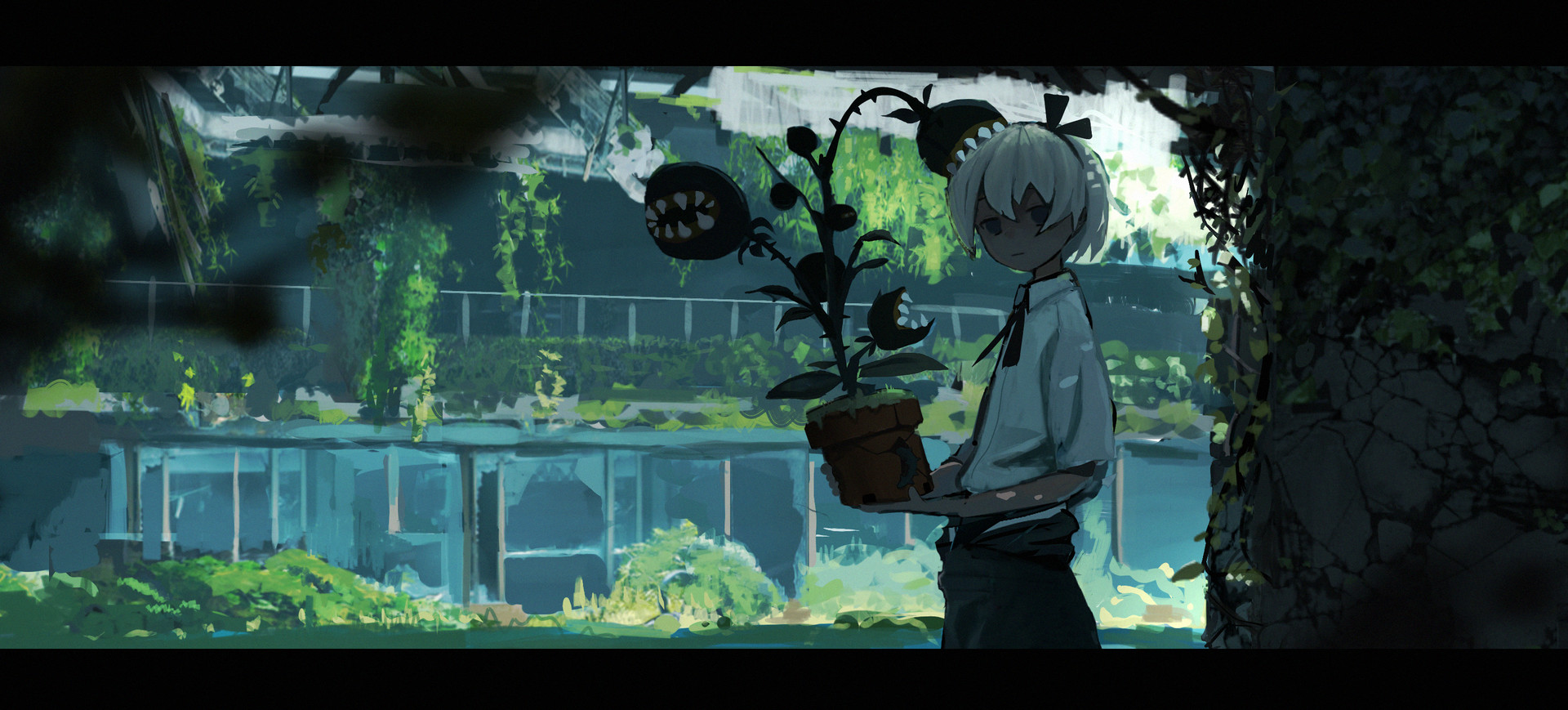
Lost, by Ksanda CreepyCrafts


There is a long-standing tradition in Mebirin to cultivate these vines. They are kept in pots, and bred to be mild. These potted vine flowers are used in semi-formalized competitions, put to the challenge of fighting one another. The gardeners are given small dishes of water with which to guide the growth of their vine, and the first pot to spill dirt onto the table or floor loses.


This is the sport of vine wrestling, a fine tradition and considered a thrilling type of battle in the Mebirin lands. Every five years, the Garden of Might is held. This tournament is not the greatest competition in all the lands, but it’s quite famous in Mebirin, and entrants from anywhere are allowed to compete.


The victor is given the Golden Seed, which is fated to either feed or destroy the entire land. None have been yet able to grow the seed yet, though many have held it.


Steelflower Chak: a powerfully-built man with a hard head and harder plants. His wrestling vines are most well known for their grey flowers and extremely broad leaves (which signify a sturdy vine). Often arrested for drunken brawling.


Dyedif the Sharpstar: a tall, elegant gardener of flamboyant fashions and even more flamboyant vines. His vines are known for having brightly colored thorns. He is known to be quite rich, and holds moderate authority in his land.


Gardening, by LOLICO BOX

The Vinesinger: a mysterious woman who seems to wander the land, quietly competing in numerous vine wrestles. She has a quiet demeanor, and hides her identity under face wraps. Her plants have vivid flowers and no thorns, instead relying on supreme speed and strength to defeat every foe who stands before her. Many challengers wish to seek her out and become the first to conquer her plant.

Wednesday, September 30, 2020

The Seven Saints

 Siblings who were heroes in their time, each was dedicated to a holy pursuit and exemplified it to an incredible degree. It has been decades since then, and they are considered holy figures. Especially for adventurers or other outsiders to normal society, the saints are an excellent way to pursue faith, along with strong personal virtues and goals to align with.


A depiction of the saints can be identified most easily by a golden body part, differing depending on the saint in question. An image of a woman with chaotic golden lines along her skin however is blasphemy, and is often a sign of great evil.

Yashtas, Saint of Song

Weaver of the saints' many tales, throughout her life she struggled to spread her name without losing her sense of self, or becoming distorted in the minds of the public. Sometimes those who inherited her charge seek only personal fame to the exclusion of all else, and are warned by her teachings about the risks of such behavior. 

Body: tongue

Symbols: purple, crescent moon, snapdragon, quartz, peacock, rapier

Task: grow your reputation, leave memories

Boon: speak a message to any people you can see, which they will surely hear even if whispered amid a storm.


Priestess, by Mahealani Rodrigues

Ishrar, Saint of Roads 

Never satisfied in one place for long, Ishrar saw many lands and tried always to leave any place she visited better than she found it, a difficult feat at times. Her followers are almost all nomads, and oftentimes traders though she mainly lived on the land.

Body: feet

Symbols: orange, cooling wind, daisy, opal, deer, spear

Task: come to a place you’ve never been

Boon: your step is sure, and you will not tire until you next stop walking.

Amarin, Saint of Battle

A mistress of weapons and all manner of fighting styles, she sought power but struggled with an inner rage that often drove her to unwarranted violence. It is thought that later in life she was able to find peace, but to this day many of her followers seek only might and care little for the restraint she tried to uphold.

Body: teeth

Symbols: red, black cloud, carnation, ruby, tiger, lance

Task: defeat a worthy foe in deadly combat

Boon: you can carry one weapon without encumbrance for a week.


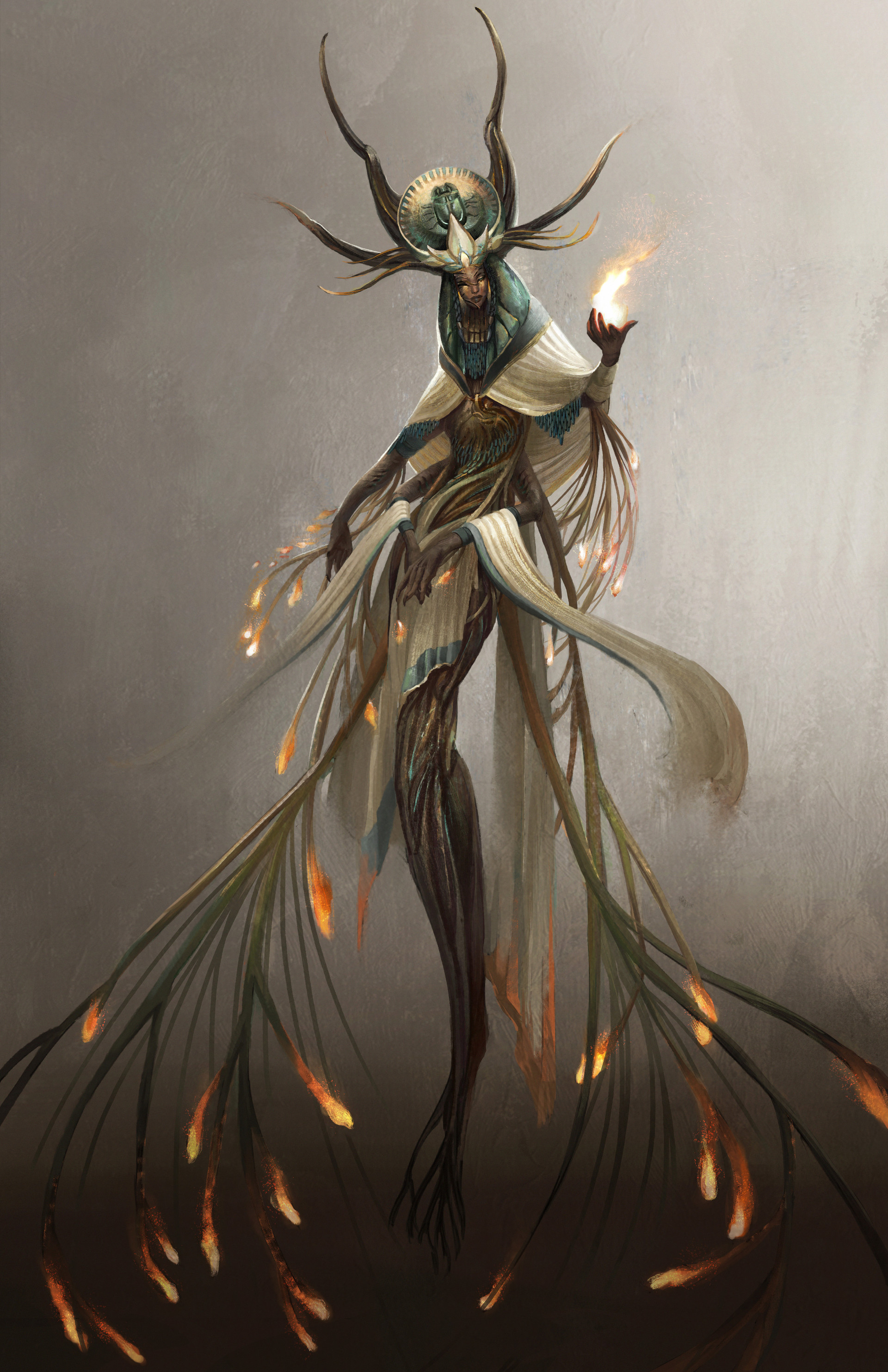
The Last Step, by Ignis Bruno

Meshar, Saint of Gardens

By far the longest lived of the saints, some say she still lives even to this day, hidden away deep in a labyrinth of flowers and herbs. As her teachings emphasize survival and health above other virtues, some think her followers to be cowardly. In truth, among them one can find some of the toughest, hardiest people imagineable.

Body: heart

Symbols: brown, gentle rain, sunflower, obsidian, carp, halberd

Task: go a week without injury

Boon: gain immunity to disease as long as you remain unharmed.

Zaraf, Saint of Libraries

Studious and soft-spoken, Zaraf spent so much time learning that she sometimes failed to make use of the knowledge she gained, and tried to hand down teachings to help others with that very task. Her followers are intended to be just as studious, though there is more variety in how and what they may study.

Body: eyes

Symbols: blue, starlight, hydrangea, sapphire, owl, dagger

Task: read a sizeable book

Boon: understand and read all languages for the rest of the day.


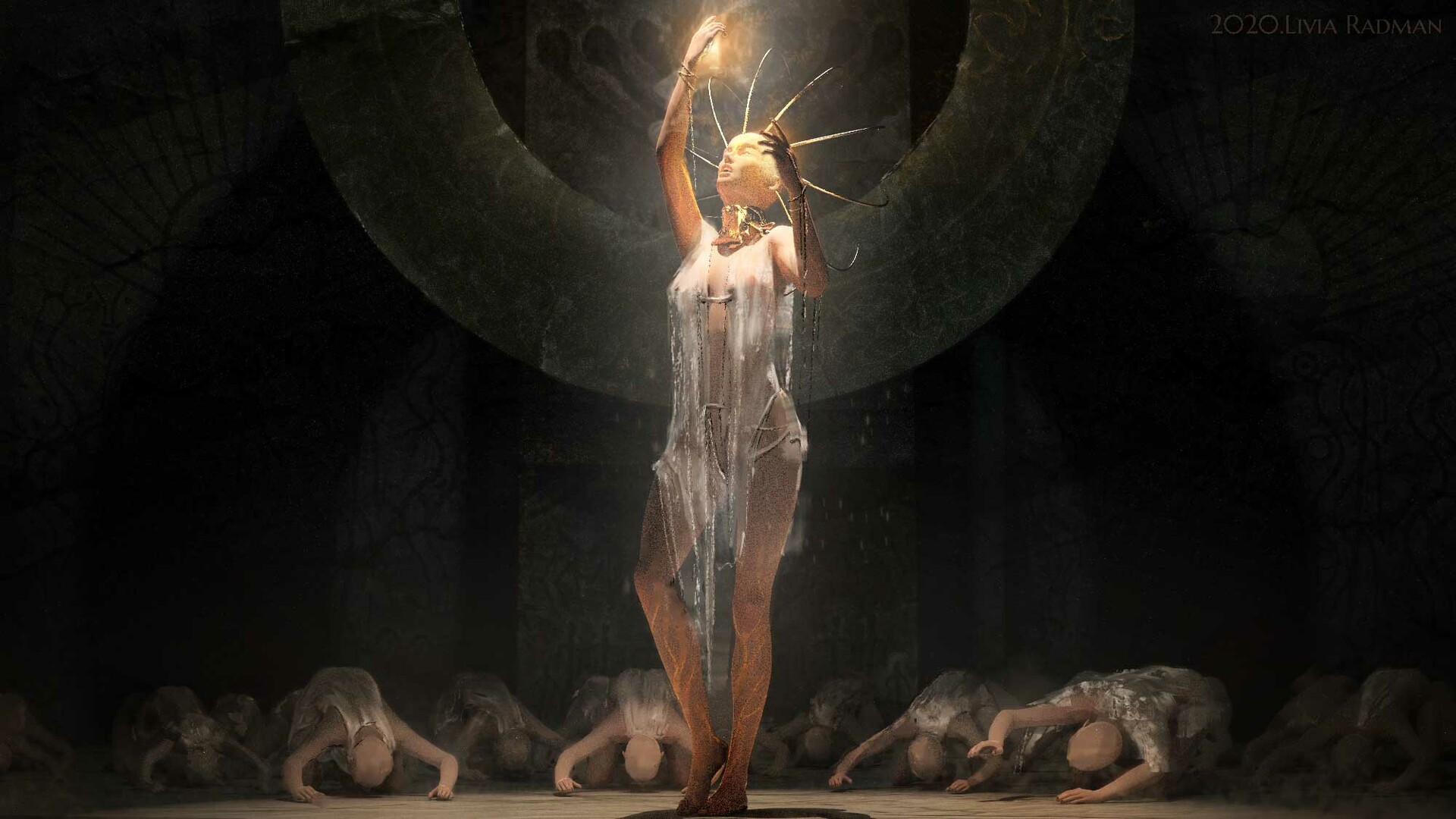
Ritual, by Livia Radman

Sunesh, Saint of Weddings

Lascivious saint, partner and spouse to many, and with nearly as many appearances over the course of their life. Sunesh was known as a generous and lively person, sometimes to a fault. Followers of Sunesh are expected to venerate them in whatever form is personally preferred, as that is how they shared love in life, and the saint's teachings emphasize consent and sensitivity to a partner's (or potential partner's) desires or needs.

Body: hands

Symbols: pink, full moon, rose, emerald, dove, whip

Task: spend a night or day with a lover

Boon: for the rest of the week, you can tell if love is true.

Niket, Saint of Home

Amarin would be the first to tell you that Niket was stronger by far. However, Niket struggled to keep up with her siblings and eventually learned to build, her creations eventually becoming the city of Il Kamiyar, the Great Bridge. Her followers congregate their, but can also be found striking out elsewhere, to spread that industrious spirit.

Body: shoulders

Symbols: green, warm sunlight, orchid, peridot, sparrow, axe

Task: sleep within a building you helped create

Boon: you can lift one object and carry it, so long as you could drag it.


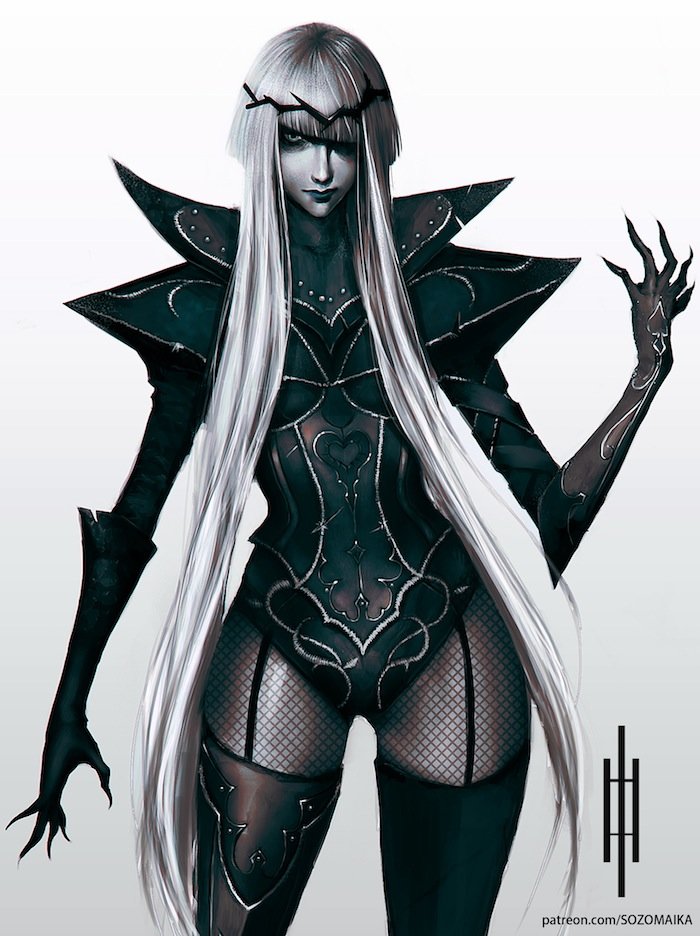
Alexandria the Black Mage, by Maika Sozo

Tevresh, Saint of Blasphemy

Said to have betrayed her siblings, they cast her out and tried to erase her memory. However a memory cannot be so easily suppressed, and may only become more resilient with each attempt to exterminate it. Those scarce teachings that can be found from her time ecourage one to abandon their duties, reject any role or path set out for you and struggle alone if you must.

Body: scars

Symbols: black, new moon, windflower, howlite, moth, broken sword

Task: destroy a shrine, or kill a leader

Boon: the next time you could die, fate may be turned aside.


Notes

I've been trying to come up with ways to engage the player with the setting more, and a huge part of that is religion. Historically religion has always been a very important in life as well as fantasy, but it seems like a large portion of the gaming community (myself included), are atheistic, so that sense of worship and service to a higher power can be... off-putting. It creates a divide between the player and the average person in the game world, their analogue.

Thus I create instead aspirational figures, so that even the most power-gaming edgy anti-theist could start from a point of "oh yeah I want to be cool like that person," and then once the player is engaged with these figures I think it becomes easier for them to shift that engagement toward roleplaying something more spiritual or worshipful. I've been told that D&D also has demi-gods and high priests and what not, but that doesn't really address this rift between the player and the average character in the world, instead making it probably wider by suggesting that we roleplay worshipping something that isn't even a god? It feels strange.

Oh hey, Skerples recently made a few blog posts about saints and gods and all that jazz. Hope they like this (or at least see it).
Monday, June 29, 2020

People of this realm

These races are all fantastical humans, and would consider many of the classic fantasy races equally human. None of them are inherently better or worse at any given thing, though cultures may reinforce certain skills or passions and shun others. If in doubt, anyone can simply be a Cikrem nomad of whatever skin color they prefer, or simply add their preferred races as needed.


Each or all of them can interbreed, with children potentially inheriting the traits of more than one parent, however mixed race characters may face unique challenges. Unusual or unique traits may also manifest in members of any race, such as pointed ears, tusked canines, or webbed digits.

Yingao

Terse, hardy people who spare few words and have ruled Tajira for too long. They wish not to show their triple tongues, which change color based on their mood.


They wear clothing dull in color and trimmed of embellishment, and similarly prefer unseasoned foods, especially raw fruits and vegetation. Perhaps this stems from their homeland, a forest so dense and overgrown that the sun almost never reaches the ground.

The Mistress by Sam Carr
(lightly edited)


Gollo

Natives to the land now held by Tajira, most would gladly see the empire fall. Illusion magic is their native art, and they can be recognized by the hole that naturally runs through each torso and limb.


They keep some records with a system of knots and dyed strings, sometimes incorporating these along the hem of a cloak or tunic, in a way that communicates surreptitiously with their people.

Bolshu

Mournful people displaced from their homeland by the yingao empire. They bear twin sideways mouths and thumbs in the place of their littlefingers.


Their fashions tend toward many overlapping layers fastened with unique buttons, ranging in length from short sleeved tunics to long, enveloping robes. Outsiders often have difficulty with the strange bolshu buttons.

Cikrem

Wayward chromatic tribes who carry distinctive Dream Bread and wear tight clothing. Stories say a child born of two tribes will lead them to a new homeland, though they care little where they originated.


Their colorful bread is well known for causing wild visions that some find spiritual guidance in, and a few simply enjoy. Most cikrem keep a large, loose hood or sash.

ZONA 2019 by Q Tori


Kippil

Allies to Tajira who hail from the mountains. Thought of as sneaky for their overly flexible limbs, each with an extra joint. They hunt great beasts in the mountains, prizing the meat and leather, and they have complex customs around leather clothing.


A single, continuous piece of leather formed into an outfit is called ‘full leather,’ with an outfit consisting of multiple sources called ‘cut leather,’ and ‘scrap leather’ as the lowest form, where the outfit is supplemented by other material.

Ortain

A larger empire lurking near the borders of Tajira, wishing for the first signs of weakness. Ashen skinned with needled teeth and faces some would call fish-like, they wield flame spewing weapons.


The frigid forests they come from are harsh and strange, and they have a strange preference for frozen meals. Exposing the arms is a sign of strength, and some may recognize the ortish cut of a flared, fur-lined vest.

Tula

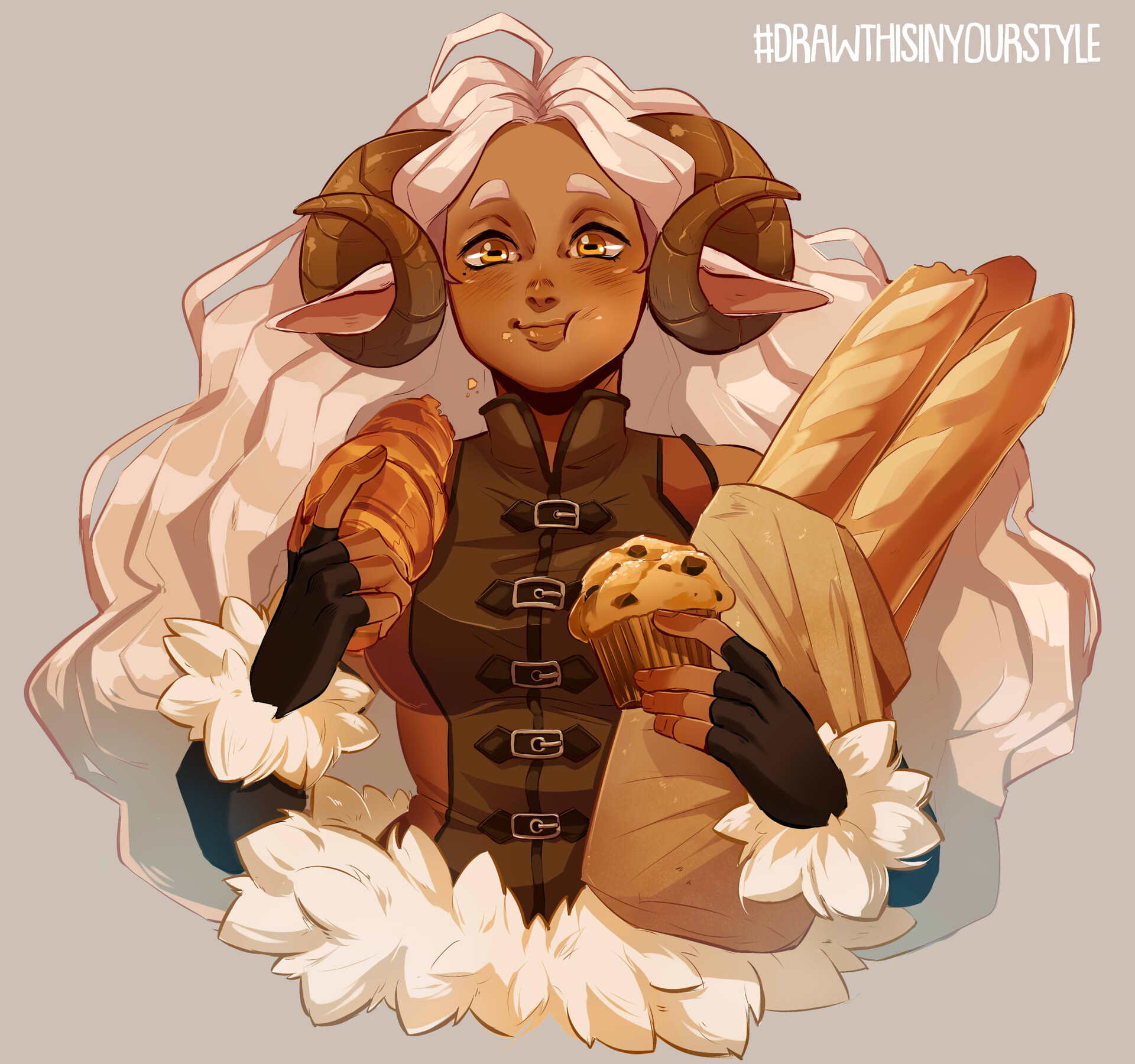
Soft-spoken folk from a land of valleys and caverns. Oft assumed stubborn due to their horned heads, and usually hired as guards or mercenaries. Because of this, it’s easy to find helmets that account for and even protect the horns.


Individuals tend to be either very tall or very short, with average height strangely rare. They prefer simple clothing, but usually bear intricate carvings on their horns.

Original Character - Sheep Girl by Lorena Carricondo

Fahd

Seen by some as savages, for their lack of clothing and hair-covered bodies. They actually possess a rich culture of hair stylings. 


Warriors will often braid their hair into tight, close-fitting rows, with shorn patterns to show their role as a life-taker. Meanwhile hunters of beasts are more likely to cut their hair shorter, and it is common for leaders or public figures to grow their hair long and straighten it.

Veshkin

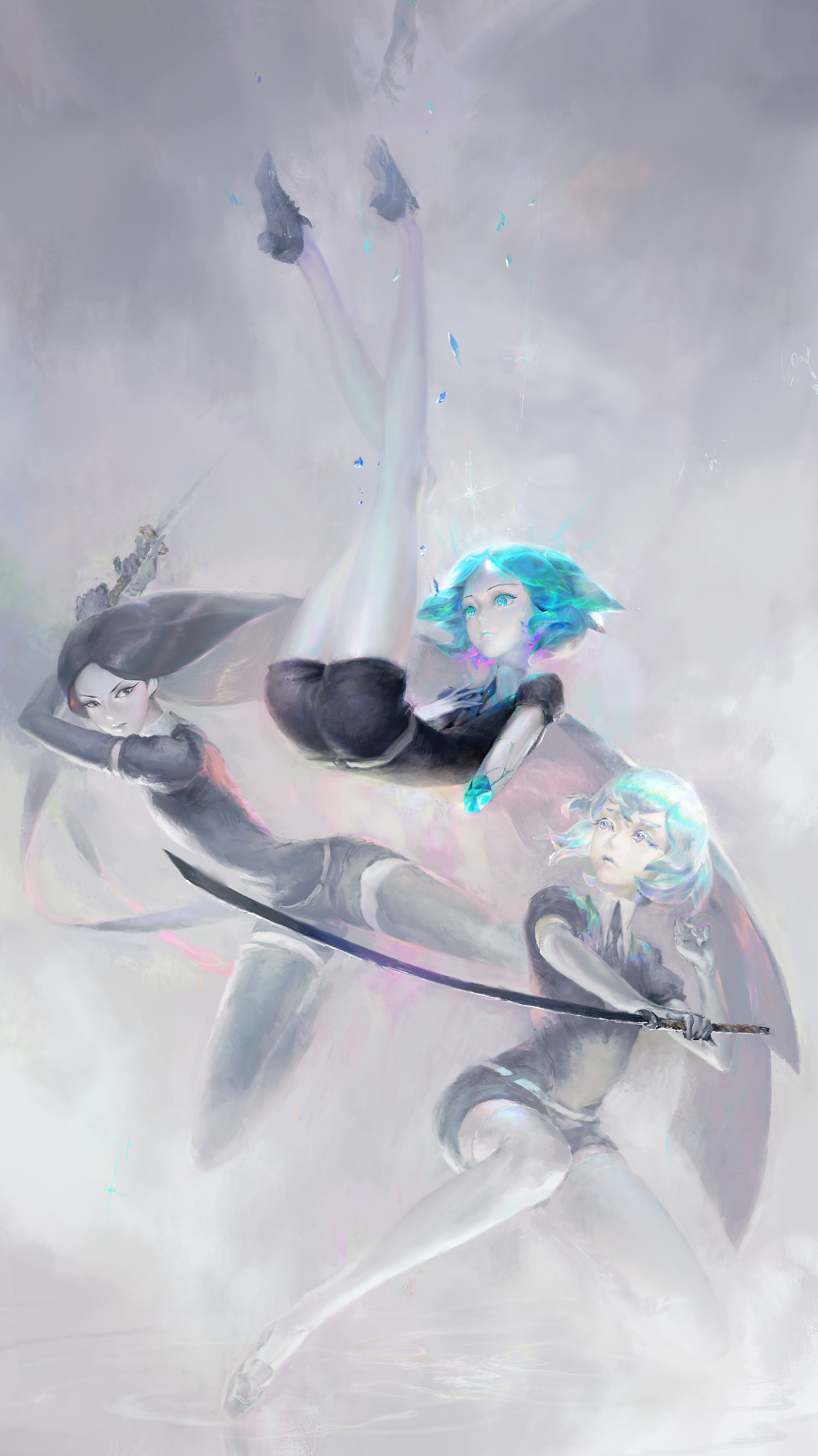
Well-trusted traders from the Kajhar desert. They are considered beautiful for their crystalline hair and nails.


They tend to wear layers of light, airy fabric with subtle patterns, but those in Tajira tend to find the climate too cold and will adopt local fashions quickly. Veshkin cooks are known for crafting many fine sweets and candies.

Phosphophyllite by Zhengyang Hu


Mebirinu

Often friendly people with black blood and bones that tinge their skin blue. By holding their breath they can turn their skin black, but this leaves them lightheaded.


They have come from far off forests of giant mushrooms, and tend to value stiff, geometrically cut clothes made of fungal paper. Officials will also wear pieces of giant insect carapace, but most in Tajira cannot afford such a luxury. Their predilection for strong drink and other fermented foods has led to a reputation as drunken poisoners.

Shimex

Seafarers with neither hair nor nails- anywhere on their body. Only some women wear wigs in Tajira, but most wear fine makeup. Rumors claim they season their food with sand, but it is actually crushed coral.


It is customary to get a tattoo each time a new crew is joined, so a shimex covered in ink has either survived many failed voyages, or moved around for another reason.

Finnin

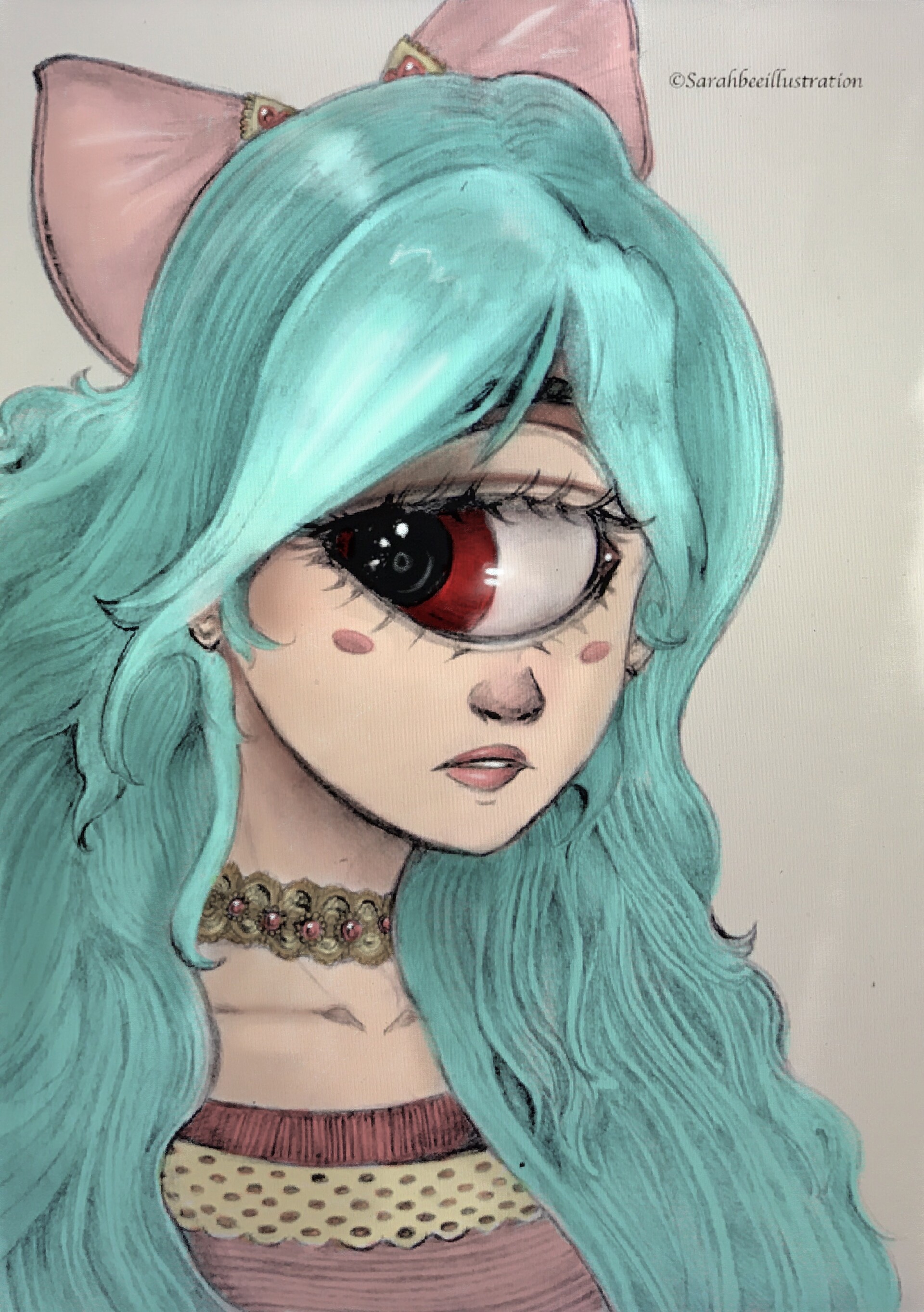
Quiet, gentle folk from cursed plains, who created the elemental magics of sorcery. Each individual has a single, large eye, some of which can be found in the darkest of markets.


Sometimes thought of as strangely violent, for their integration of armor-like plates of metal in clothing, which is generally made of surprisingly fine, sturdy silks.

Cyanne by Sarah Burks


Nihemi

Graceful people of fine ceramic and artful silks, they have metallic skin and four, narrow eyes. Very rarely one will be born with golden skin.


The wealthy trade in quicksilver, requiring extremely specific containers and the finest of porters. Strange, tall mounts carry them aloft, keeping the long draping robes that are in fashion from dragging on the ground.

Sunday, June 21, 2020

Shalilas, city of the genie

The trader Veklen knows the route, but will guard this secret. They need help though, taking brightglass through the desert. Kajhar is a dusty land, but not a dead one. Great scorpions and lizards lie under the sand. Afield is the cactus desert, a beautiful but deadly place.


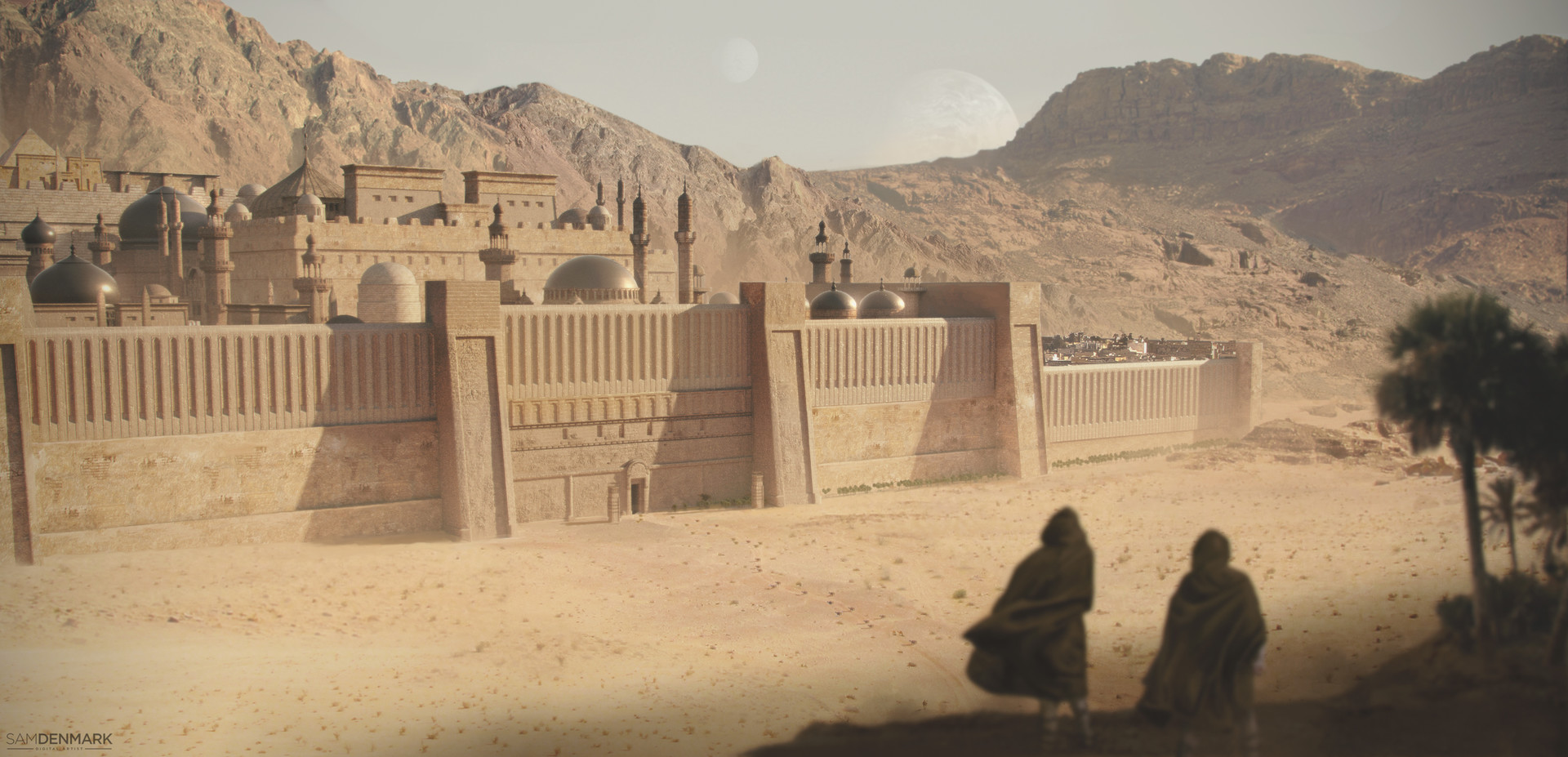
Near the tail of the Great Dune lies the city of genie, Shalilas. The human trader keeps it a secret, but the genie care little if they are found. The gates are living, possessed by sometimes lackadaisical genie. In times of need however, those gate genie respond instantly and resolutely.


The most need for traders lie in the small human population. They all know each other, and most are Wishmakers, paid to request simple wishes. Wishmaking is not lucrative; they each have other reasons for being here, and make a living in other crafts.


Desert City by Sam Denmark

At the outskirts of the city lie mounds of shattered clay and slag metal, the cast-off remnants of genie who moved up in the city or died trying. Living in the refuse are the lowest of genie, poor souls wearing broken scraps as their body. Even those unfortunate denizens know they can rely on Mother Neres, long-standing guardian with an unusually sturdy body of charred oak. She speaks rarely, and spends her time protecting the slums rather than leading the city.


Most genie in the city will inhabit bodies like human-sized dolls of clay or ceramic, or metals such as steel or iron, or even zinc when possible. Very rare bodies will be made from even lighter materials, like glass or rare metals. Heavier bodies are also uncommon, but more as a matter of practicality than expense. It is more common to see a genie in a body that cannot move, such as a pot, lamp, or other artisanal item, with an attendant or companion to carry them.


Fashion covers an eclectic and varied range, as one might expect from the wide variety of possible bodies. The most important traits for genie clothes are convenience and versatility, as the vessel can always be changed for more long-term appearances. In that vein, there's also something of a trend for genies to alter their vessels, bolting on additional parts or carving away small portions. The right shops can offer strange and unique piercings or other strange changes to the bodies of mortal visitors.


From anywhere in the city, and some ways beyond, one can see its metaphorical center. It is the Green Palace, a gleaming tower of glass holding the city’s greatest elders. Perhaps the most powerful, though not the oldest, is Prinim Veshisk, a massive genie in fine glass. He enjoys his unwieldy, fragile vessel, and forcing slaves to maneuver him. The newest councilor is Toril Syaran, who suspects Prinim may have destroyed a rival on the council, and wishes to expand trade with the mortal world.


The city also relies on the Incense Mines, an ancient buried forest from which all manner of aromas have been gleaned. These scents and the colored flame they produce give the genie incredible sensations, be they euphoric, inflaming, or subduing. At the markets, one can buy such things as stonesmoke cones, fire-dripping sticks, and spiritwalk powder. A hopeless addict to the stonesmoke, Dalifer has spent much time wandering the desert looking for anything to pawn, and if given incense will tell visitors of some of the stranger things out there.


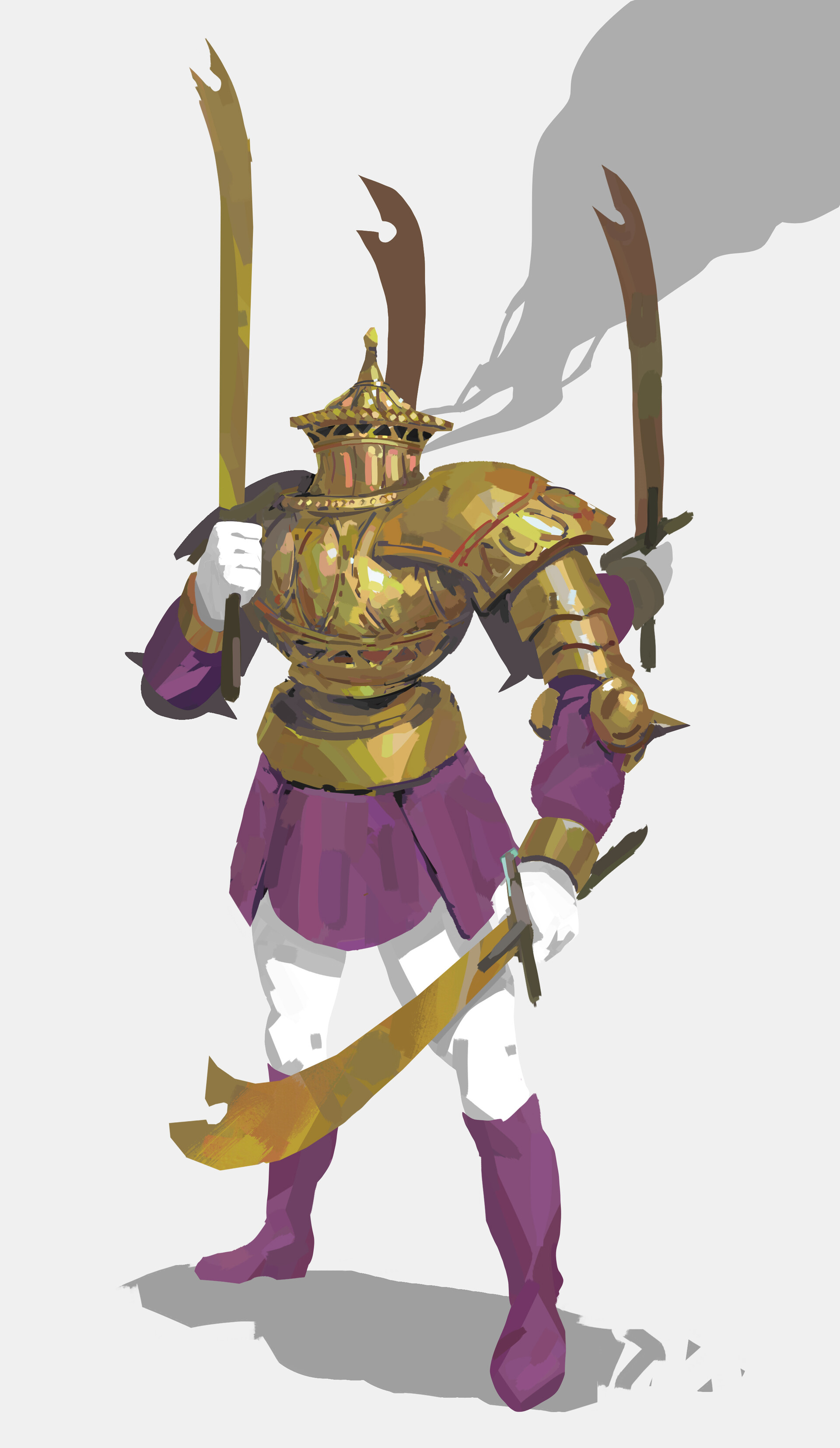
Main Image
Incense Knight by Hwa Min Jung

Most genie outside the city have been lost for ages, found buried in ancient ruins with little memory of where they originated. Only a few have left the city or been kidnapped, and most end up finding their way to Shalilas eventually. There are only two ways for a genie to truly die, without arcane intervention. Either by the decay of the vessel, to a point of complete incoherence, or by failing to transfer to a new vessel when they may leave their present place. The worst wrongdoers are imprisoned by building a pit like a well, lined with stone and filled with sand to bury the criminal.


Perhaps the largest gathering of genie outside the city are at the sandstone fortress of the Smoke-fist Warriors, an order of veshkin mercenaries who ritualistically burn one of their arms to let a genie inhabit it, granting increased strength and an uncanny ability to fight with two weapons at once. The genie Ryula lives secretly within their order, inhabiting a burnt corpse of unknown origin.


Walking the streets of Shalilas

  1. A young genie approaches carrying shards of pottery, looking frightened. He says his master’s vessel has been shattered, and he needs you to buy him a new one quickly.

  2. A commotion from the gates as a genie rushes into the city, asking for aid in rescuing their fellow’s vessel, a vase which has been captured by bandits in the desert.

  3. Prinim’s procession (or another vainglorious councilor) fills the street, forcing commoners and visitors aside at risk of violence.

  4. A player’s finest weapon catches the eye of a Talmar Fineshadow, a genie adventurer who just returned from the Labyrinth of Glass with plenty of gold and a new obsidian vessel. Talmar wants to buy the weapon, and seemingly won’t take no for an answer.

  5. The group is approached by a genie carrying an empty vessel, handing them a few coins and telling them to make a wish.

  6. A human notices the group and rushes over, offering to sell them snacks. Fruit on a stick, peeled and covered in spicy powder, they are more expensive since human food is uncommon here.


Incense

  1. Stonesmoke cone: a strangely vivid grey incense that produces deep black smoke, and a rich, salty scent. The namesake smoke is rigid, flowing upward regardless of wind or touch, and feels like shifting stone.

  2. Dripfire stick: particularly long sticks of incense that produce a dim orange flame that does not rise or flicker, rather dribbling down from the end. The scent is sweet and spicy, sharp but fading quickly. The flames are not mere liquid, as indeed they weigh nothing

  3. Astral powder: incense dust that creates a strange, misty smoke, wafting and waving in unfelt winds. The scent is slightly minty and makes one feel energized but calm. The sensation is like being outside of one’s body, and it is said that an excessive amount can draw out the soul.

  4. Harmony coil: usually sold in a spiral shape along with instructions on how to light it. The smell is woody with a floral note, and can vary slightly depending on the type, usually enhancing introspection and self-discovery. It is unique for being ignited by sounds, of particular tone and patterns based on the shape of the incense, despite always being the same material. The common spiral is lit with a low whistle.

  5. Midnight pellets: small beads of blue incense that smell tangy and a bit sour when lit, giving mild feelings of energy and preventing all sleep as long as it burns. On a moonless night, the pellets will burn like tiny stars.

  6. Iris oil: debatable as incense, this fluid always seems to be watching, and when burning releases colorful smoke that leaves afterimages and increases sensitivity of body, mind, and spirit. Some say it simply makes people more suggestible.


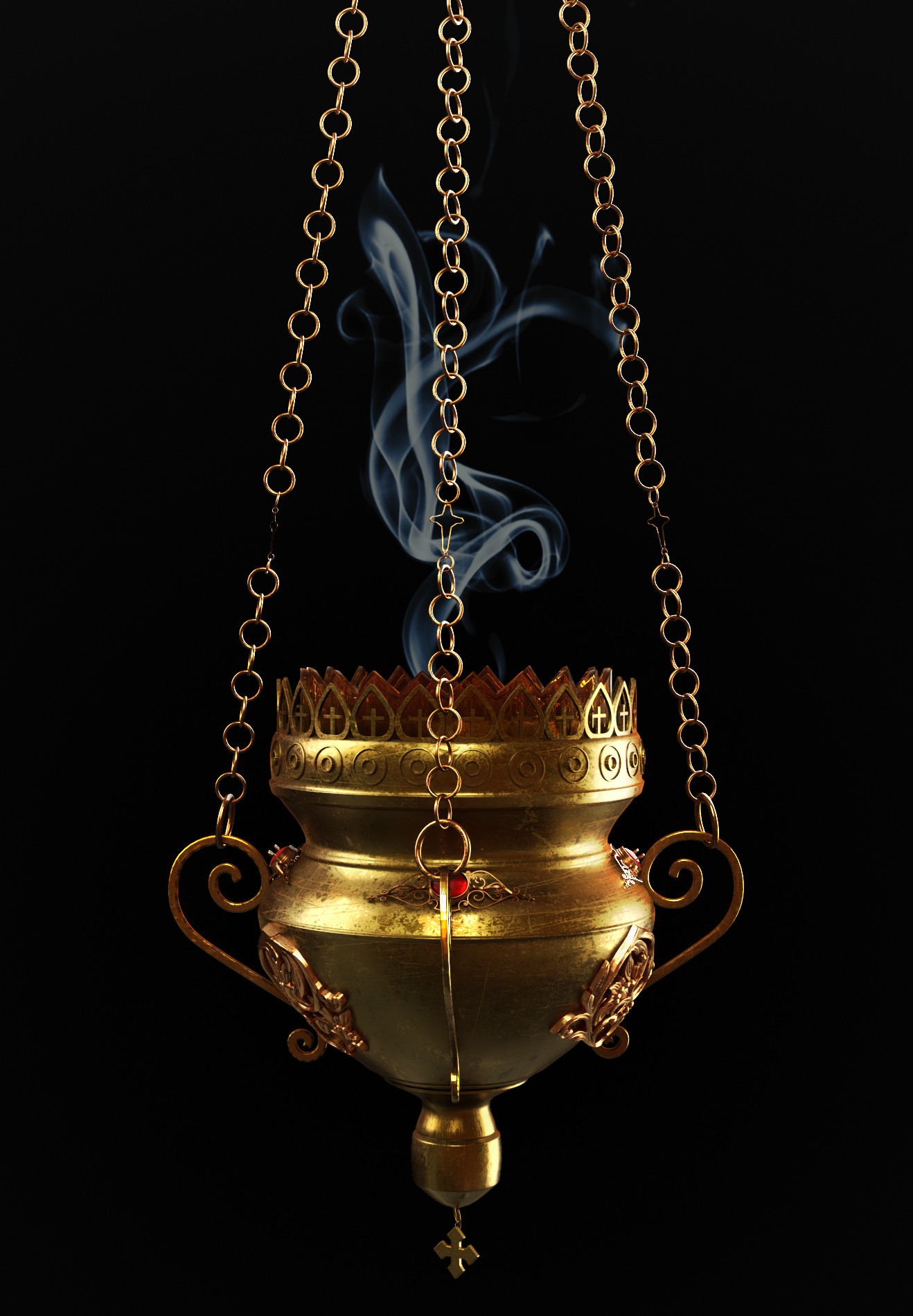
Insense Burner
Gold pot by Sandesh Tuladhar

Dalifer’s trade

  1. A giant made of flame, unnaturally tall and gaunt, striding the desert a short distance to the south. It’s been seen twice, each time at midweek, heading the same direction and leaving a trail of glass footprints.
  2. In the cactus jungle, full of prickling trees and scorpion monkeys, a spiralling pit of carved stone that leads to unknown depths.
  3. A gigantic carapaced serpent, coiled and gleaming in the sun. Dalifer ran before realizing that it hadn’t been moving.
  4. Black sand amid the desert, laid out in a perfectly symmetrical pattern with no one around to have done it. The wind hasn’t picked up since it was spotted, so it may still be there.
  5. Bandits lost in reverie at night, singing and dancing around a fire. They were burning stolen incense, but there were simply too many.
  6. Flipped upside down, a huge statue of a head. Very detailed face and square structure that wouldn't roll on its own. No other parts in view.

Directly connected to the previous post, and also part of the GLOG community city challenge! Other participants include: